


Four bands on making music and finding a stage
Ahead of Bloody Autumn: Last Fall on 21 November, Okovi, Ciroza, Nexvs and Horizons talk to Lia about rehearsal rooms,…


Four times in 2025 our electricity was cut off because we couldn’t pay the bills on time. That same year, young musicians spent more than 2,000 hours rehearsing and recording with us. They paid for none of those hours. Both facts are in our annual report.
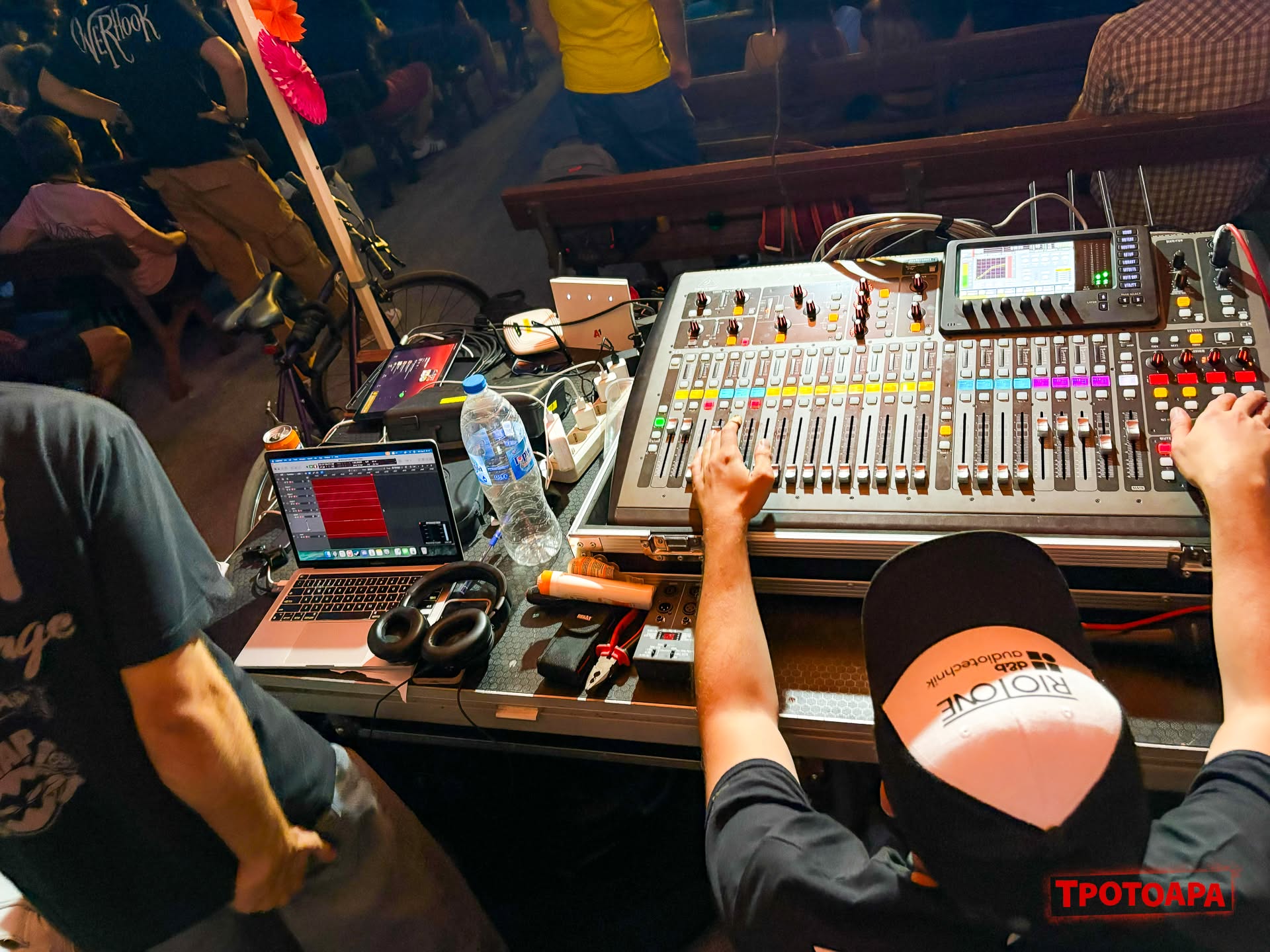
If you’ve heard a school band play at TRAP Fest, you may have heard a song they rehearsed during one of those hours. Someone unlocks the door after school, switches on the amp and stays until the last band has packed up. At the end of the month, the bill comes to us. When people sent us ten or twenty leva in the spring, their donations helped us pay what we owed and keep the room open for the next rehearsal. Rehearsals and recording (PDF, p. 6) · Electricity bills (PDF, p. 15, in Bulgarian).
As of 24 November 2026, Trotoara 2020 is in its sixth year without a single state-funded staffing allocation. In Bulgaria, a chitalishte is a local community cultural centre. The number of staffing allocations it receives determines its annual state operating subsidy. Sofia Municipality gave us the use of a building. We’ve won project grants and we have donors and partners. Here’s what their support has made possible, and what we still have to find the money for each month.
When we ask for a state subsidy, we want funding decisions to take into account what a centre does for its neighbourhood. A music school may rent a room at a chitalishte. The teacher enrols the students, teaches the lessons and collects fees from their families. The centre provides the room and receives rent. Its annual report should make clear which activities the independent school runs, which the centre’s own team organises and which children can attend free of charge.
At Trotoara we don’t rent out our rooms. School bands rehearse and record for free using our instruments and equipment. When a band wants to play its first gig, our team and volunteers plan the show with them, carry the speakers and help them through their soundcheck. We find the money for electricity and for repairs when an amp breaks. A subsidy would help us provide the thing the next band needs most – someone who has the time to welcome them and work with them.
Magi tells this part better than we can. Before she came to TRAP, working in live sound had never crossed her mind. On 3 November 2026 she wrote that she could now run sound at small events on her own, work at events for the Begach running club and show newcomers what to do. She admits it still scares her. A concert programme has no entry for the moment someone trusted her with the mixing desk. We want a permanent team so there will be someone here to do that for the next person, too. Read Magi’s story · Hear volunteers Maria Pavlova and Albena Bistrekova on Bulgarian National Radio (in Bulgarian).
2020 and 2021. During the pandemic, 229 of us came together online to found the chitalishte. The following year, on 24 May, we opened our library. School students donated their favourite books and left a note inside explaining their choice. The next reader could open the cover and find a recommendation from someone their own age. By the end of the year, the collection contained 1,021 donated titles. 2020 annual report · 2021 annual report, page 6. The reports below are in Bulgarian.
2022 and 2023. Our new home at 34 Louis Ayer Street needed major repairs. In 2022 alone we organised more than 50 volunteer work sessions. Over 150 people gave more than 1,000 hours of their time. In 2023 we ran more than 30 volunteer activities and put on more than 20 club gigs in support of school bands. While some people worked on the new building, others made sure the students still had a rehearsal room and a stage on which to play their own songs. 2022 annual report, page 6 · 2023 annual report, pages 13–14.
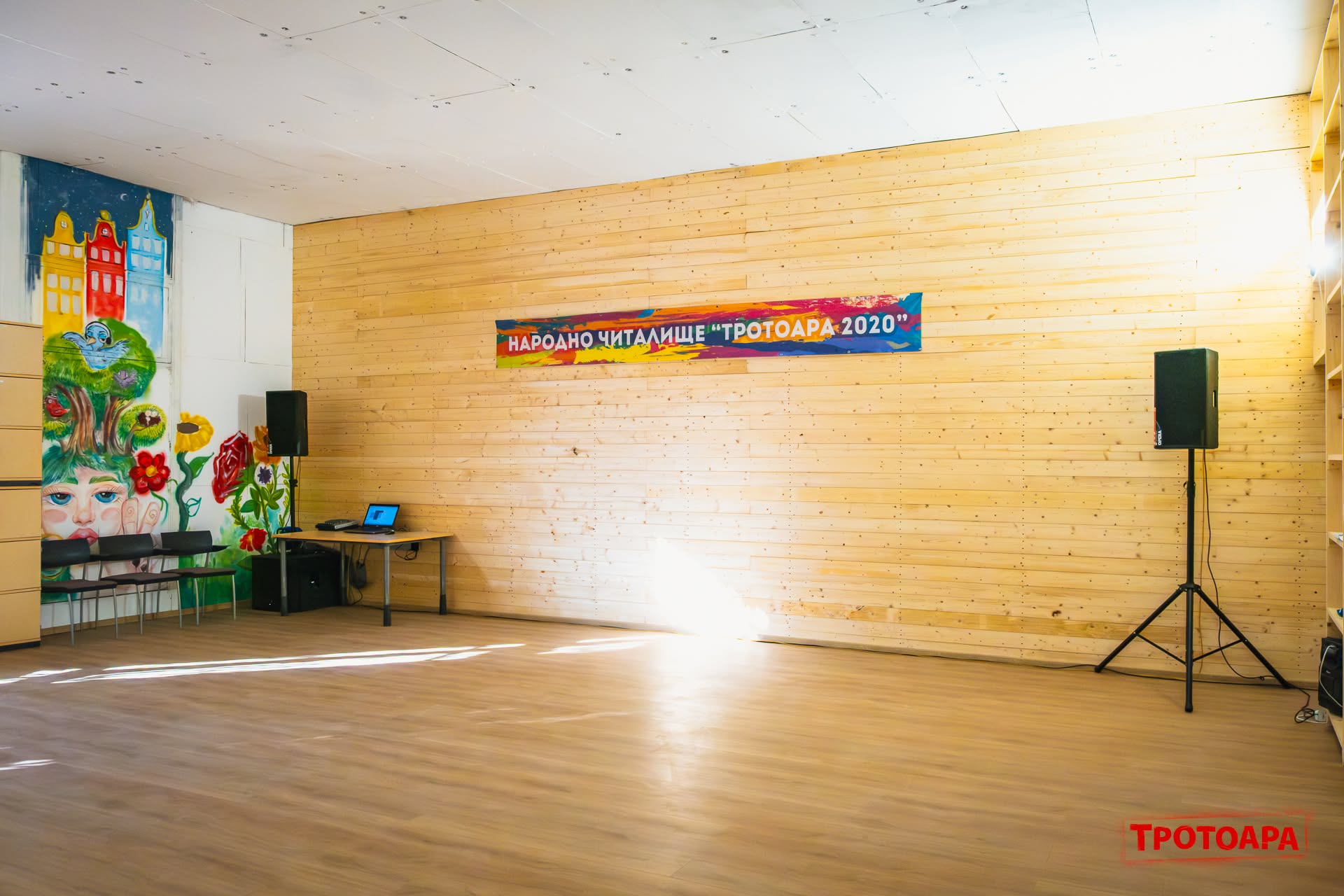
2024. Young bands spent more than 1,000 hours rehearsing. Recording accounted for over 200 more. More than 500 children and young people used the centre for music, workshops and other activities. That year students helped insulate the new building and painted its exterior. In December the concert hall was still short of 120 square metres of flooring. We put the figure in the report so anyone who wanted to help could see exactly what was missing. Illustrated 2024 report · Full report and progress on the building.
2025. On 15 September we began running regular activities at Louis Ayer Street. Over the year we organised more than 50 volunteer activities. Through Sound and Future, young people learnt to use stage equipment and helped put on three concerts. In Lyulin for Young People, students, schools and the district administration worked together on podcasts, workshops and gigs. A band from outside Sofia could use our studio too. Illustrated 2025 report, studio and rehearsal space · Full written report for 2025 (PDF).
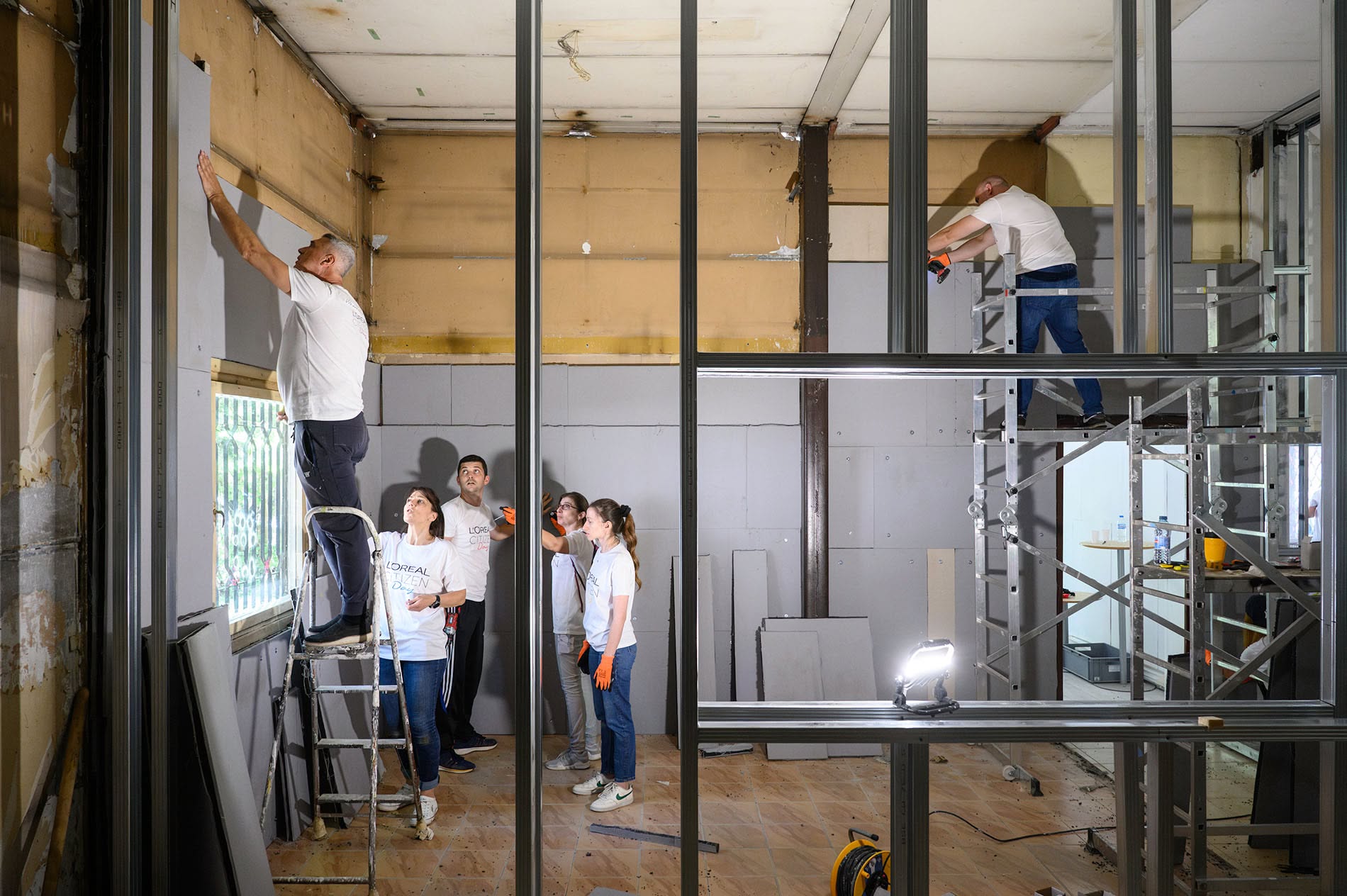
On 24 March 2022, Sofia Municipal Council granted us the right to use the building at 34 Louis Ayer Street free of charge. We’re grateful to Triaditsa District and to the municipality for this home. When we got the keys, the place still needed safe wiring, soundproofing, flooring and equipment. By our count in October 2025, more than 800 people had taken part in the renovation over three years. Partners donated materials. L’Oréal staff worked alongside our volunteers. The council decision · How we got the rooms ready (in Bulgarian).
A chitalishte can have the use of municipal premises, receive public funds to renovate them and also draw an annual state subsidy for its activities. If it lets rooms, the rent is a further source of income. Sofia has a documented example of public investment in renovations at four centres. Our open letter raised a separate example. We described a chitalishte building that housed a pet shop and a driving school. What we’re asking is what the neighbourhood gets for the public funds the centre receives. Who welcomes the children? What can they do free of charge? Who takes responsibility for it? Our neighbours can ask us the same questions. That’s why we publish our reports. Bulgarian News Agency on the municipal project · The example in our open letter.
On 13 October we told the story of the application we had filed on 1 November 2024 under reference 76-00-4699. More than 150 pages of photographs, accounts, activity reports and letters of support. Seven Sofia district administrations, the municipality’s Culture Directorate and the authors’ rights organisation Musicautor backed us. The only answer we could pass on to the people who had helped us put it all together came by phone. “There’s no money.”
By then we had already put on more than 40 events in 2025, and over 300 school students and other young people had volunteered. In the post we announced we were cancelling our National Awakeners’ Day concert, an annual celebration of Bulgarian educators and cultural figures. Two days later Deyan told Bulgarian National Radio that Vaso Gyurov had helped with sound and we were getting the bands back together. In the end, there were two days of music at the National Student House and about 200 people attended. Between the cancelled gig and the one people actually went to was someone who found a way to help. Our 13 October post · The interview on Horizon · Our letter published by the Bulgarian News Agency.
On 19 December we still had a three-day festival to put on before the year ended. We published an account of the work already done and addressed the minister of culture, his deputies and the mayor of Triaditsa by name. Without a subsidy for the following year, we wrote, “our days are numbered”. The government had resigned. We asked those who still had the power to act to leave the students with some certainty. We shared the illustrated report, the full written account and the archive from previous years, so anyone could check the work for themselves. Our 19 December post.
Our accounts show where the income came from. Around 52% came from corporate donors, 21% from our own commercial activities, 19% from Sofia Municipality and its districts, 5% from individual donors and 3% from events. Municipal programmes helped us put young bands on stage. Around 10,000 people attended TRAP Fest in 2025. Each project grant has a budget, a deadline and a list of things it can pay for. After the last concert, the message still comes in from a student asking when the band can rehearse. Someone has to answer, and the room needs electricity. Income and expenditure in 2025, pages 30–31.
On 5 May we published the Ministry of Culture’s written reply and two letters of our own. We had confirmation that our application was registered on 3 February 2026 and that additional staffing allocations would be considered when the 2027 budget was drawn up. We submitted a request under the Access to Public Information Act to find out what procedure and criteria determine the outcome. In the second letter we invited the ministry to a working meeting. As of 24 November 2026, we are still waiting for a decision on our subsidy. Our May post with the documents.
The most important part of that post was addressed to the people who helped while we waited. Some donated towards the bills. Others brought tools, painted, recorded sound, took photographs and told people about us. Parents entrusted their children to us. Some of those children came in shyly and needed to hear that they were welcome and could give things a try. Long before a young person takes the stage, they need somewhere they can walk into without being asked whether their parents can pay.
We are asking the Ministry of Culture to meet us and reply in writing. What criteria govern new staffing allocations? How was our application assessed? If we fall short of a criterion, which one? If we meet the criteria, when can we expect a decision? The next group of people who found a chitalishte ought to be able to get answers too.
We invite the people making that decision to 34 Louis Ayer Street while a band is rehearsing. Ask the students who gave them the key, who taught them to use the equipment and what it cost them to be there. With dependable funding we could employ two or three people to work with young people all year. Then, when the next school band writes, “Can we come on Wednesday?”, we’ll know we can say yes.
If you’d like to stand with Trotoara, share our story with someone who could help bring about that meeting, volunteer, or help pay the next bill. For partnerships and visits, write to info@trotoara.com. And if you were one of the people who sent ten or twenty leva and wondered whether it made a difference, we’re still here. Thank you. Support Trotoara · All annual reports, including the archive for 2018 and 2019 · The six concerts of TRAP Fest 2026 in words and photographs.
This post is also available in: Bulgarian
Ahead of Bloody Autumn: Last Fall on 21 November, Okovi, Ciroza, Nexvs and Horizons talk to Lia about rehearsal rooms,…
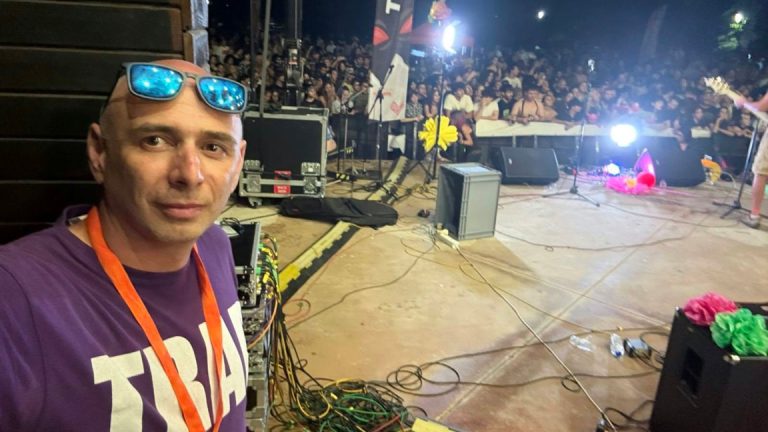
Speaking to Ivaylo Stefanov on “Alarma”, Deyan Yankov describes the cultural life of the Trotoara 2020 Community Center, from…
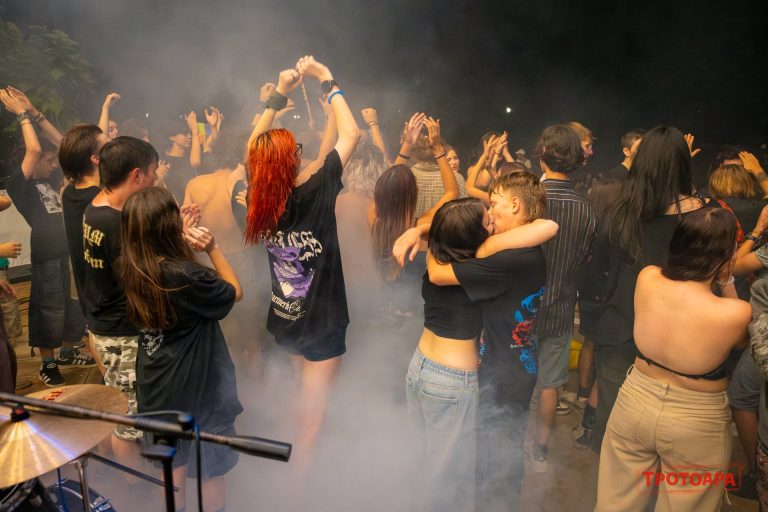
TRAP Fest is a free festival and a stage for young bands who deserve the best possible conditions to play…
