

TRAP Fest 2026 – A summer with the people who made it happen
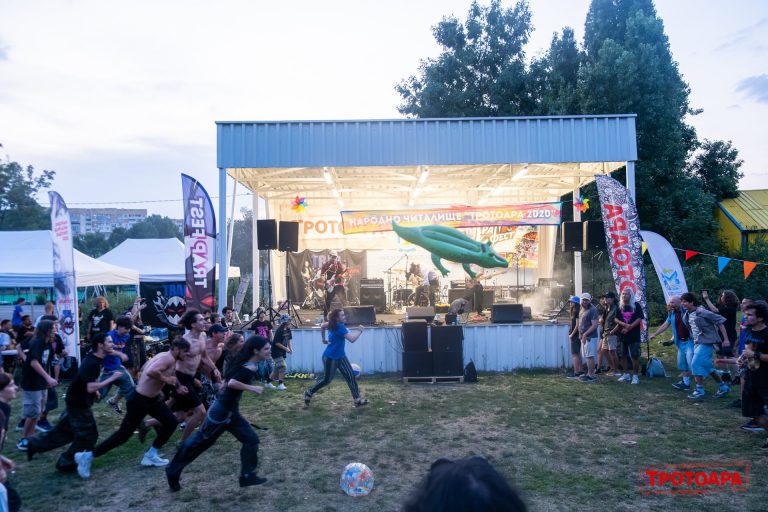
A closer look at the tenth edition A summer evening at TRAP Fest, 27 June 2026. On 14 June, setup…


Deyan “Dido” Yankov on the tenth edition of TRAP Fest
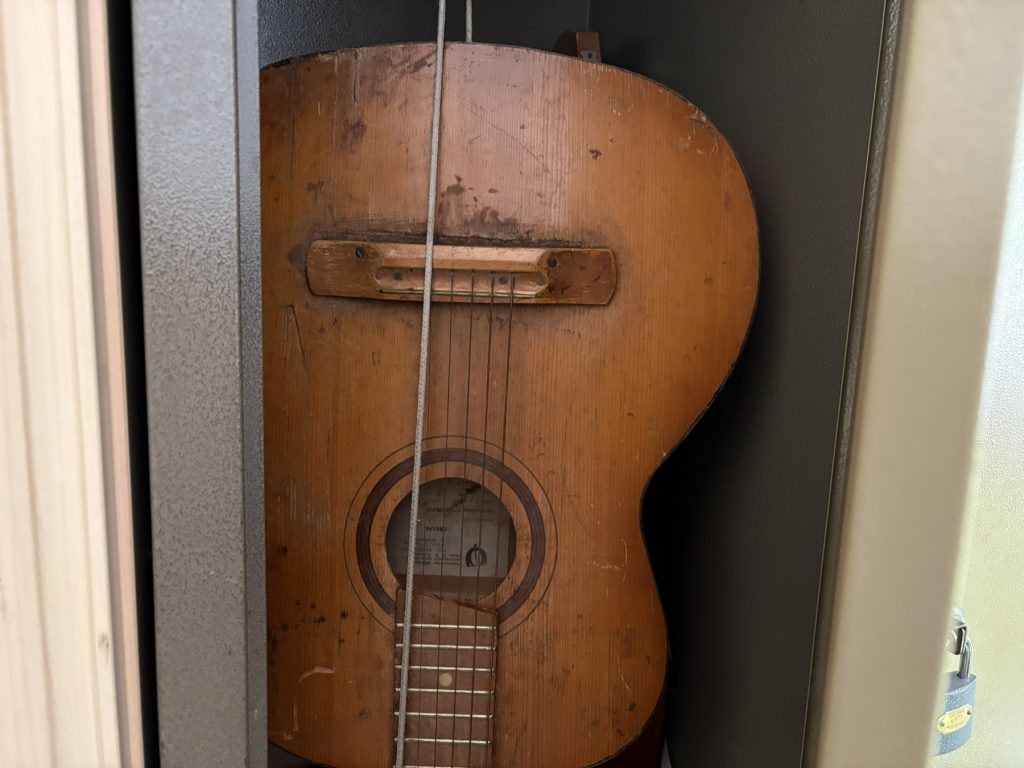
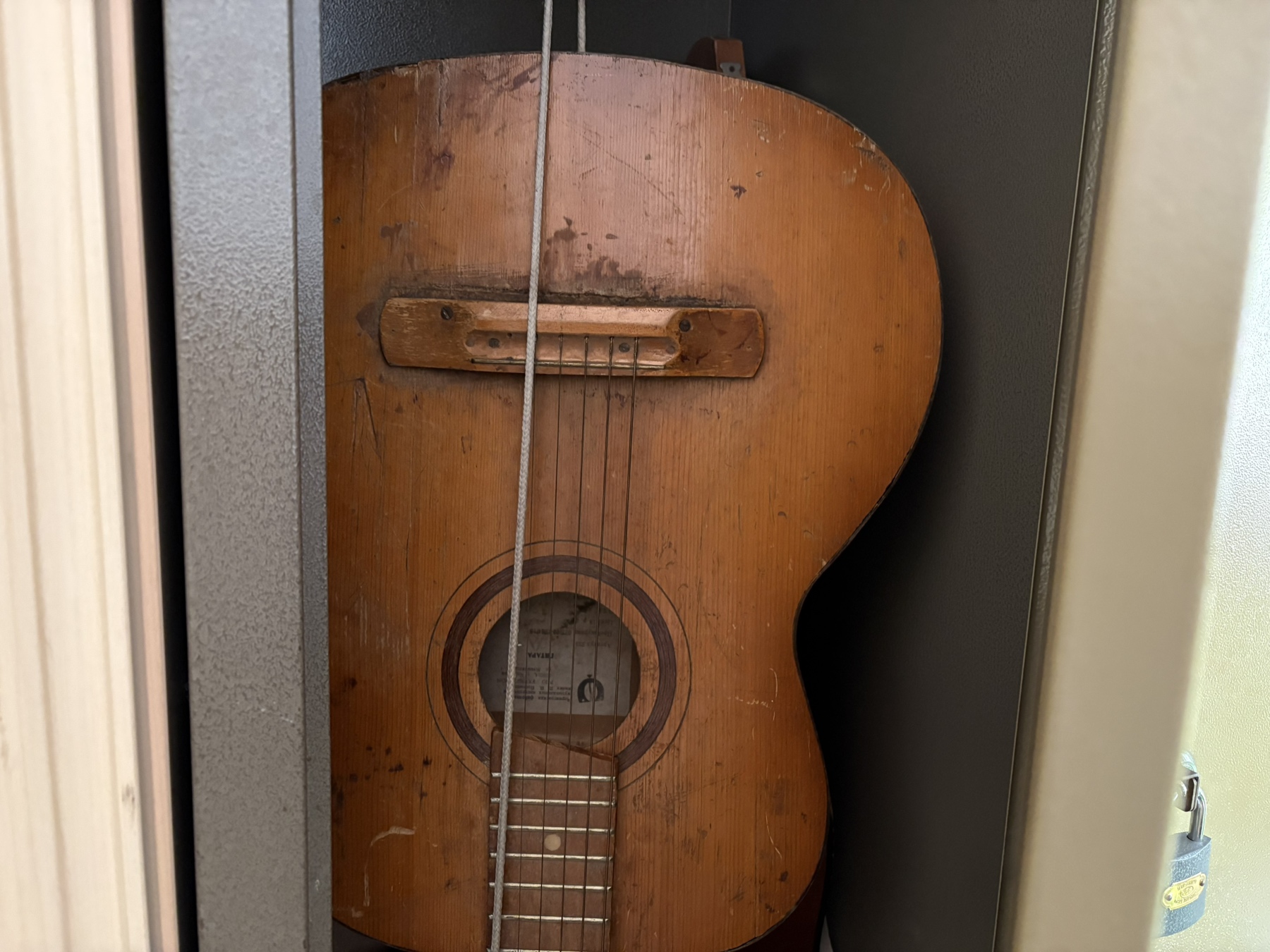
The guitar is still in the metal cabinet in my office.
My first guitar is in a metal cabinet in my office, in the community centre’s new building. The neck’s warped badly over the years. It was made for nylon strings, but it’s got steel ones on it now. I reckon they’re at least fifteen years old. Even when I was a kid, those strings were so stiff they tore my hands to pieces.
It’s been broken, it’s been dropped. I’ve left it with a few people over the years, and it’s always found its way back to me. It even floated around in Pancharevo Lake once before I managed to fish it out. A bit like that Pink Floyd video. Maybe one day I’ll hang it on a wall somewhere. For now it’s locked in the metal cabinet in my office.
Sometimes I think back to ninth grade and remember what that thing did to my hands. From about the fifth fret up it was pretty much unplayable, and you could never get it properly in tune. But I also remember carrying it around the school corridors and standing at tram stops with it, acting like I was some big-shot musician.
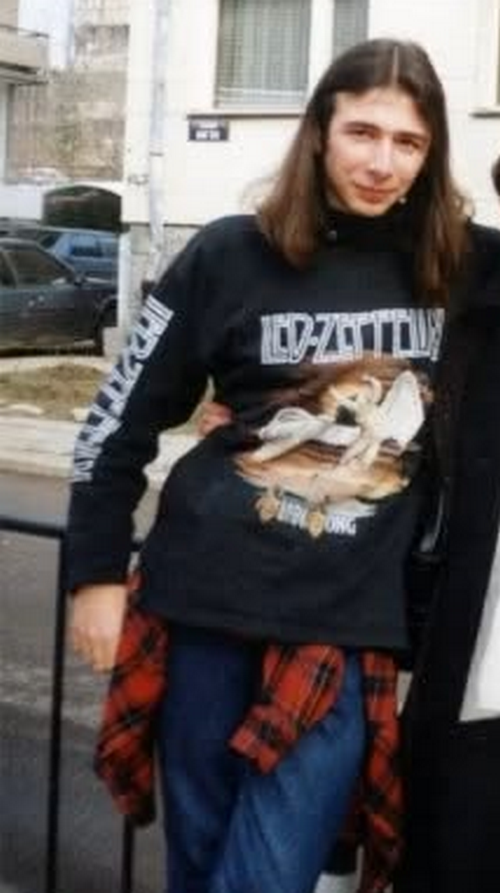
Outside the National High School of Mathematics and Science, in tenth grade.
If I had to pick one song for this year, it would be “Another Thing Coming” by Judas Priest. Ever since I read Rob Halford’s autobiography, I’ve thought of it as my anthem for the year.
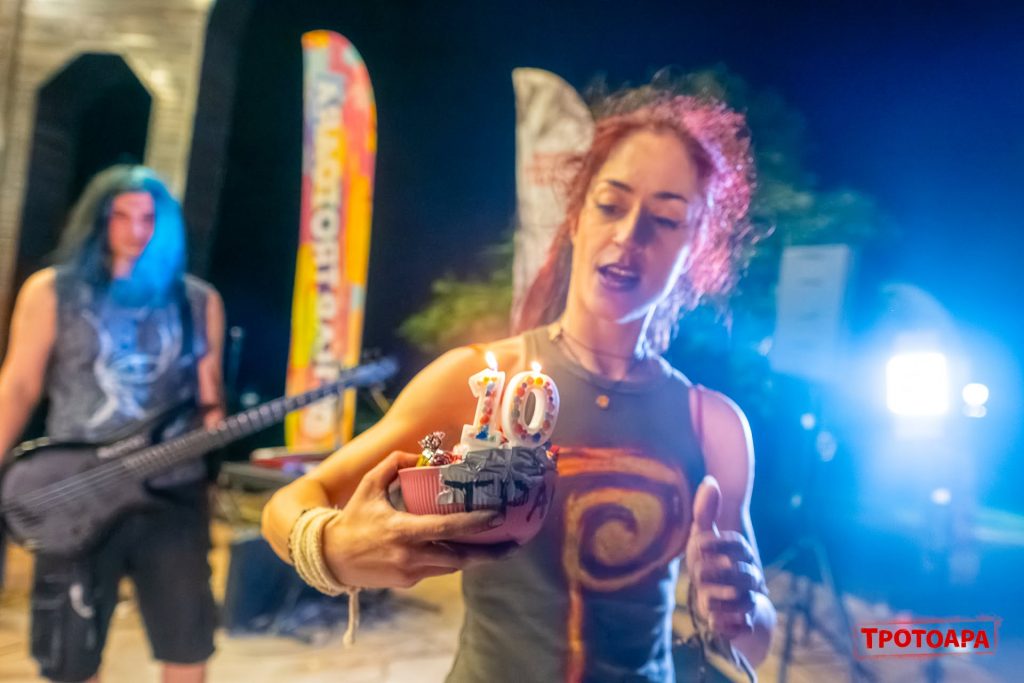
On 14 June Poetsky were playing. I didn’t see the candles coming at all. I’m terrible at celebrating things, birthdays and all that. I never know how to react. But that was the first time it really sank in that this was the tenth anniversary of TRAP Fest.
I couldn’t get my head around it. I just couldn’t believe it. Nobody could have known what was going through my head, but right then it hit me: we’ve been doing this for ten years.
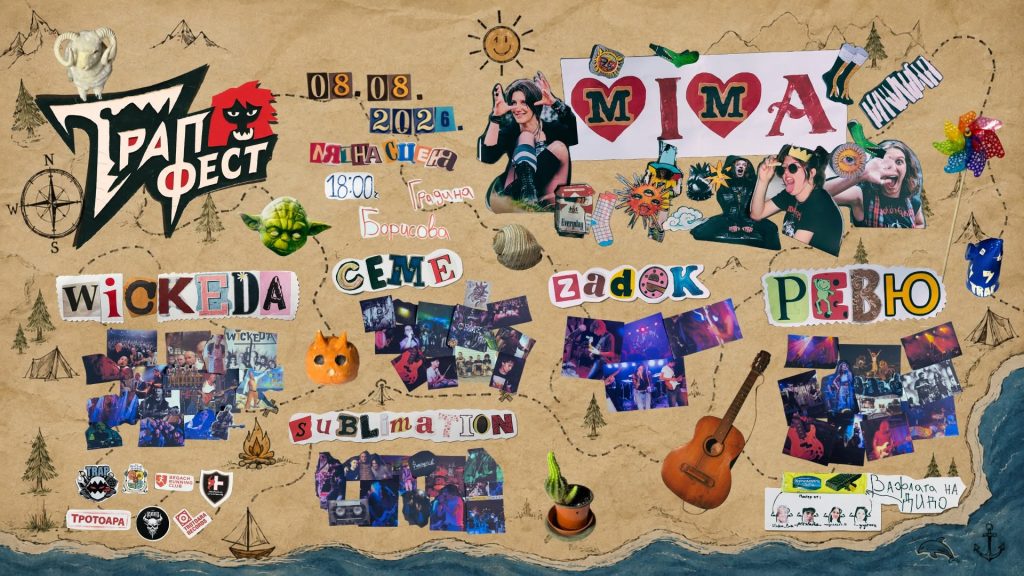
We spent ages making the MIMA! poster. At first it was complete chaos because, as usual, I gave people the job without explaining it all and left them to wrestle with it.
It’s one more thing that at least twenty people told me, “That’s not going to work. It can’t be done.” And I want that on the record. I pushed them pretty hard. We worked on the poster for days, on the floor and up on the wall. Several people spent a lot of time on it, and there’s so much energy in that poster.
I felt it had to happen exactly that way. Because it was the tenth anniversary. Because this was the high point of the festival, maybe the greatest event I’ve ever put on in my life. And because of Mima, and there I just… what can I say?
I listened to Revyu in high school. I listened to Wickeda in high school. These are songs I grew up with, songs that really shaped who I am. I can play a lot of them on guitar. Quite a few I learned on that very first guitar, the one in the cabinet now.
And there I was hearing them played live for the kids and young people we work with. There were so many moments when I genuinely wasn’t doing a thing. I’d put my work down. I could do that thanks to Toni, who was running the sound, and more than forty volunteers . That was the official count. I couldn’t even begin to list all the other people who helped. I hadn’t had that many volunteers since the big festivals at Sofia Tech Park in 2018 and 2019.
I just watched the band and listened to the music. I knew I had to let myself live that moment, to take in everything that had happened over those ten years to bring us here. I took a photo of Revyu on stage during the last song of their set. That picture means a lot to me.
It’s also why we don’t have many photos from MIMA! I’m usually the photographer, but this time I’d handed the camera over. I really wanted to feel it all and see the event from every side. To talk to as many people as I could. To take it in from everywhere so I’d remember as much of it as possible.
Usually I’m doing sound, taking photos, looking after the volunteers and doing a thousand other things. I don’t get to hear a single song the bands play. Often I don’t even know how the actual gig went because I was busy with everything else.
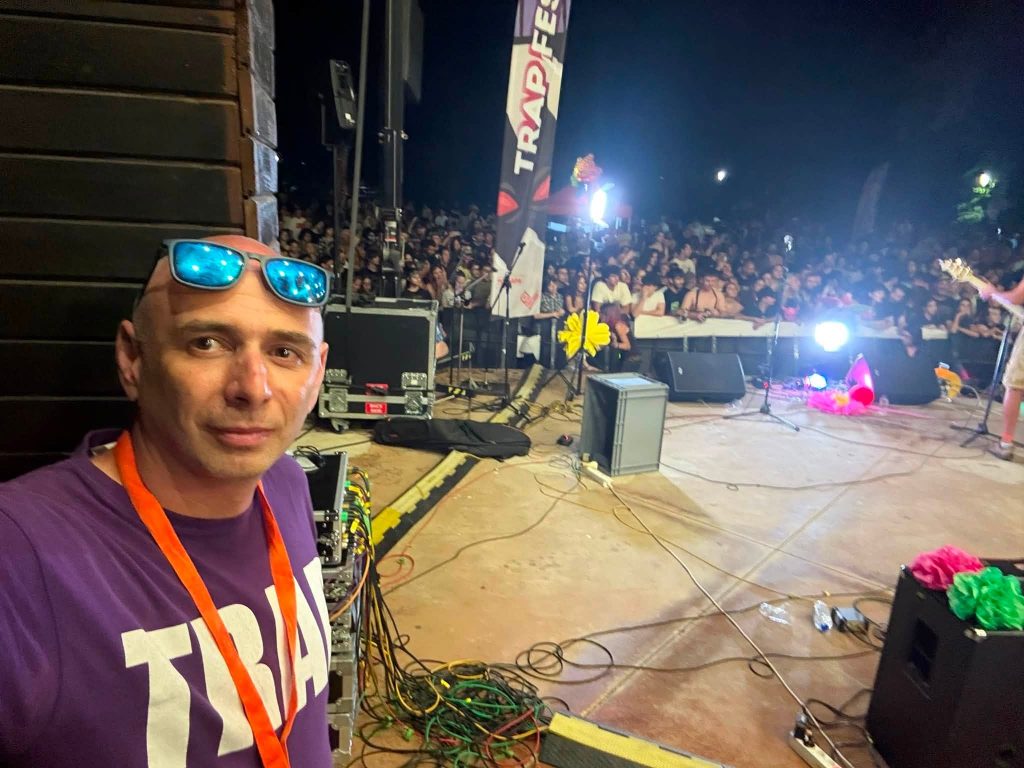
Looking out from the stage.
I don’t want to pick just one volunteer. It wouldn’t be fair to the others. Magi really came into her own this year, with all the work she took on, all the things she got involved in. She’d helped before, but this was something else. I’m really happy I have the chance to do something for her.
But I don’t want to overlook anybody else. Some people didn’t miss a single date. And it wasn’t just the shows. It was the days before and after, all the work with the gear. We really ought to do a whole separate interview about the volunteers.
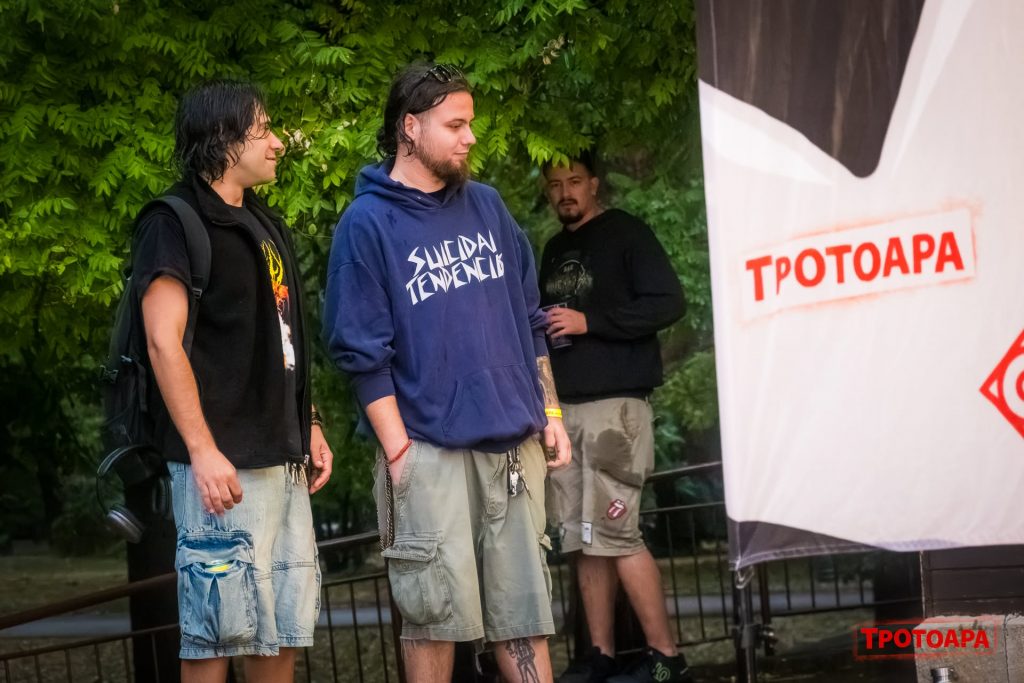
The people around the stage.
This year I put absolutely everything else in my life on hold. My car’s been sitting in Varna broken down for going on two months, and I can’t get away to pick it up. There’s nobody at home to get things fixed and paint my walls and ceiling. I set aside at least twice as much of my personal life for the work at Trotoara as I used to.
And yet I feel calmer. After these ten years I feel like I’ve finally found a way of organising things that works for me, and a way of managing myself. I’m getting more at ease with what I do, and I hope some of that confidence and calm rubs off on the people around me.
I don’t know how much they feel it. But I’ve never felt this sure of what I’m doing, or this calm about how things are going.
The idea goes back to 2011. There was a project in Dupnitsa called Rock Academy. I got to know the people behind it and started asking how it had all come about. Young people went there for support through music, but it also gave them somewhere to meet, grow up and find their people.
I loved it. It was one of the reasons I set up the Trotoara Foundation in 2014. Then, in 2020, the people who’d gathered around us and I founded the Trotoara 2020 Community Centre. We wanted a place that the people using it would genuinely help to build.
A trotoar is a pavement, the place we all pass through and meet, young, old, all sorts. But there’s also a very personal picture in my head. I’m in ninth grade, standing on the pavement, listening to music and waiting for the tram to school. That’s what I always see when I say “Trotoara.”
Our space is called TRAP, short for Trotoara Room for Angry People. To me, “angry” here is that teenage feeling of wanting to change something, to give things a try and find your own way. It doesn’t necessarily mean anger in a bad sense.
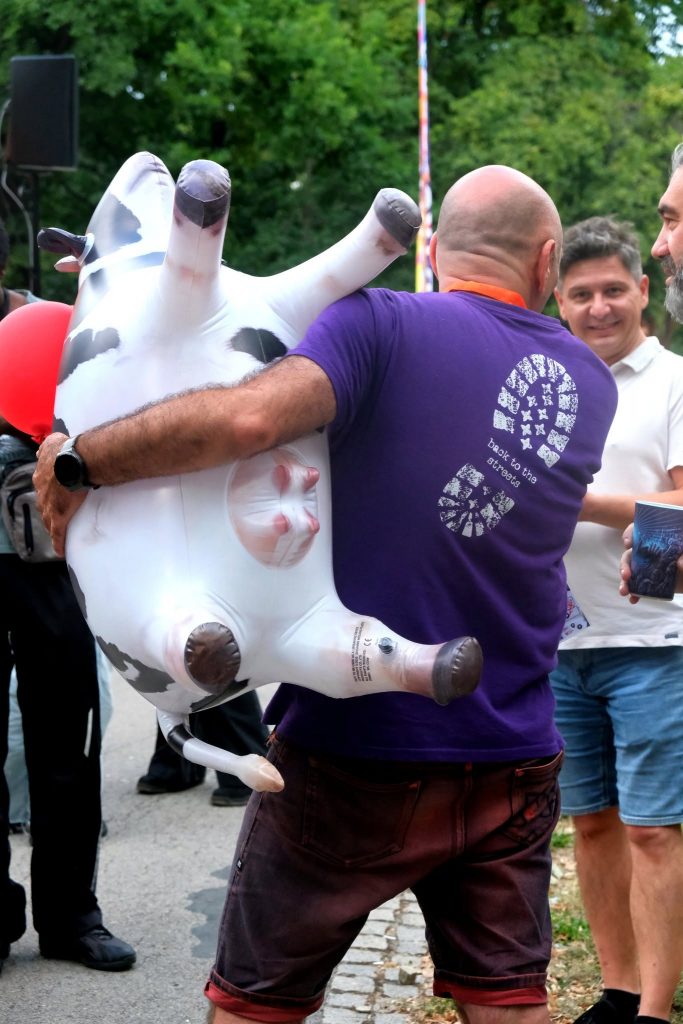
There’s even an inflatable cow among the festival props.
After the guitar, I got really into recording. The first digital recording programs were coming out then, and I wanted to know how they worked and how you could make music with them. At one point I dreamed of being Ennio Morricone and writing film scores.
I’m a long way from writing a film score these days. But there were times in our old studio when I’d just stand there looking at the gear. We’d built exactly what I’d pictured in ninth grade. We want to build an even better studio in the new place. When people ask me where I find the energy, that’s one of my answers.
We’ve tried a lot of formats. We started in 2017, then in 2018 and 2019 we put on the big festivals at Sofia Tech Park. Back then the pressure on me was immense. After the 2018 edition I couldn’t sleep properly for a month. I didn’t know whether I was coming or going.
In 2020 the pandemic upended our plans, so we started putting on outdoor gigs at the Summer Stage in Borisova Gradina. These days organising them is calmer and more efficient. We’ve got people who know their jobs, we’ve got experience, and little by little I’ve learned to let go of having to do everything myself.
Some bands write to us. Others we follow and invite. In spring we run Freedom Fest, which bands apply to play, and that’s another way we find new names for the summer line-up. There was so much interest this year that I think we could have filled another three dates.
I try to get young bands and first-timers, people we already know, and musicians from other towns. That way their audiences get to meet. I’ve had teenagers tell me it’s their dream to play this stage one day. This year we had people who used to be in the audience and now play here with their own bands.
We can’t always pay a fee, and sometimes even travel costs are a problem. Our bank account was empty before the first gig, and we had bands travelling from other towns who needed our help. Thanks to the people we know and the partnerships we’ve built, we managed to cover their expenses.
Some of the kids who came to our first events were twelve. Now they’re at university, and some have already graduated. Sev and Dobri, for instance, have been helping with TRAP Fest since 2022. They were still at school then. Now they’re university students. It’s lovely to see them grow up.
We’ve helped people find friends, work, a sense of direction, or just somewhere they feel at home. When you’re a teenager and things are difficult at home or at school, even a little support can mean the world. I see it happen. It’s one of the reasons we keep going.
Some international students in Bulgaria got in touch because they wanted to put on their own event. They needed a hand with sound, organising things and paperwork. I asked what date they had in mind. It turned out to be 27 June, when we already had a concert in Borisova Gradina.
I said, come and join us, let’s put the two together. That way they wouldn’t have to build everything from scratch. They could bring their own activities and help spread the word. I really like backing youth-led projects like that, where people have ideas and need a little help to make them happen.
One day a guy called Zhoro got in touch. He’d seen our gigs and wanted to help out, with the drums among other things. He came over to the new building, we met, and while we were talking he said it really reminded him of a place in Dupnitsa, the Rock Academy project.
I looked at him and asked how he knew about it. Turns out he’d been part of it when he was fifteen. And he had no idea that was where I’d got the idea for Trotoara in 2011. Having someone I’d never met walk in and recognise something of that place in what we’d built here, all on his own, really meant a lot to me.
We carry on working on the new building at 34 Louis Ayer Street. There’s still renovating and sorting out to do, and there’s the studio to work on. We got the use of the building with the support of Triaditsa District and Sofia City Council. Much of the work happens thanks to donations and volunteers.
We also work with the dance community Balgarska Kitka. They use the hall, but they also come and help with repairs and join in when we’re doing things together. For me, that’s how you build a community. You do something together and afterwards there’s time to talk.
The hardest part is keeping it going. Projects and donations help, but they’re here today and might be gone tomorrow. We need to know we can pay the bills and have people working here on a regular basis. When you’re not constantly worrying about how to pay the electricity bill, you can do the rest of your work better, too.
What I remember about that last gig on 12 September is the rain. All season up to then we’d managed to dodge it. On 12 September it rained.
What made me cry, and still gets to me even now, was remembering our very first gig in Borisova Gradina in 2020. LSD played, and a few other bands. It doesn’t matter who the other bands were. During soundcheck that afternoon, it started pouring. Everyone crowded under the overhang behind the drums. Then, while it was still coming down, they went out and jammed and played the drums.
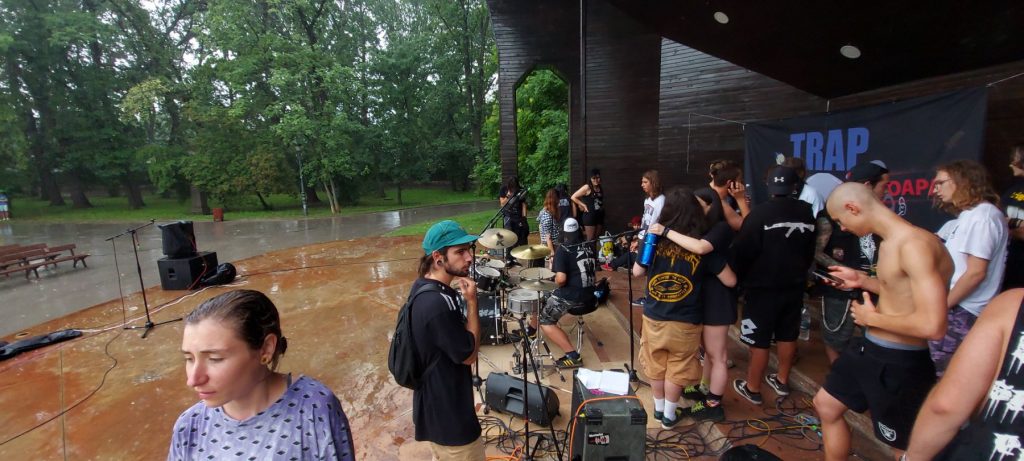
2020, under the overhang behind the drums.
And now I reckon seventy per cent of those same people were back on stage in Borisova Gradina. When it started raining, they were standing there just as they had then.
I looked at them and thought, six years isn’t all that long for an adult. But when you were sixteen or seventeen then and now you’re twenty-two, twenty-three, twenty-four, six years is a lot.
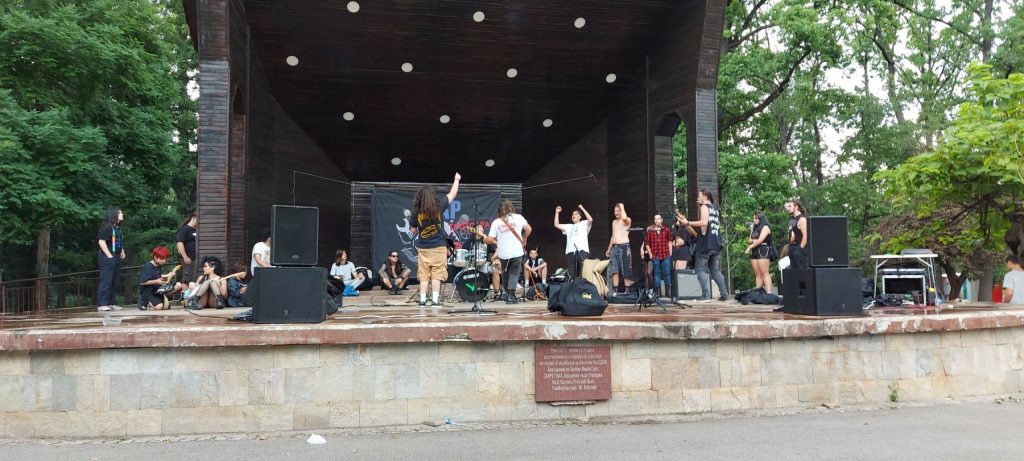
2020, our first summer at the Summer Stage.
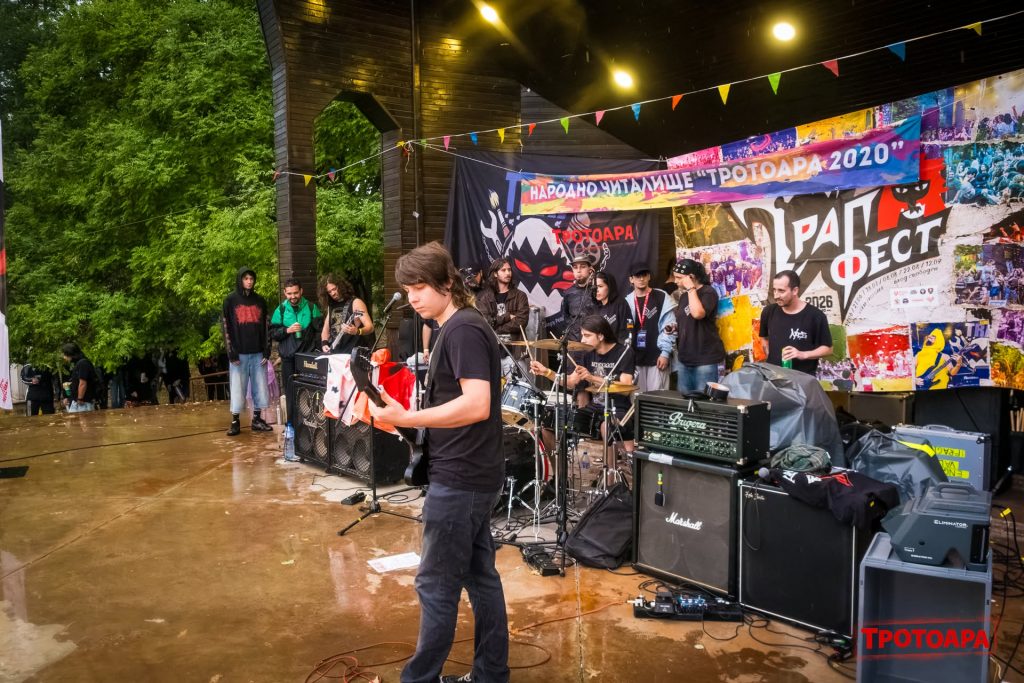
2026, the same stage six years later.
I saw those people all grown up. Still there, still playing metal. It’s raining. They’re playing the drums. They’re together and they’ve got each other’s backs.
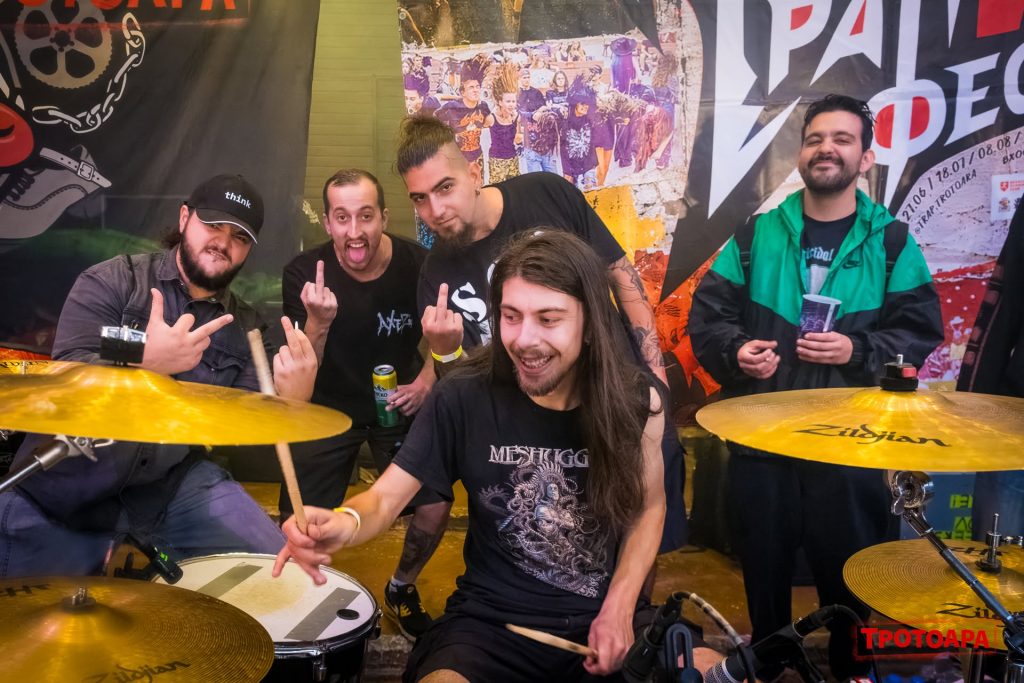
2026, back around the drums.
That’s what made me cry. Even talking about it now gets me choked up. I can’t say any more.
This post is also available in: Bulgarian
A closer look at the tenth edition A summer evening at TRAP Fest, 27 June 2026. On 14 June, setup…
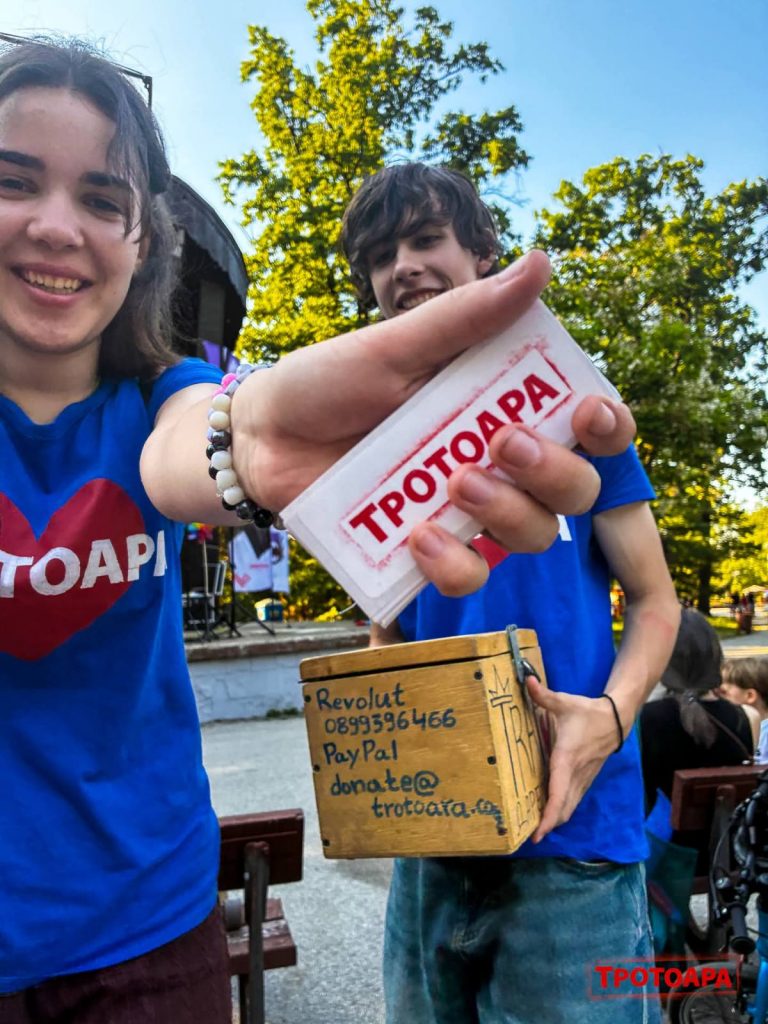
Magi | My summers of 2025 and 2026 The people of TRAP Fest, in front of the stage and behind…

TRAP Fest 2026 is underway: the opening gig and what comes next TRAP Fest returned on 14 June for its…
