


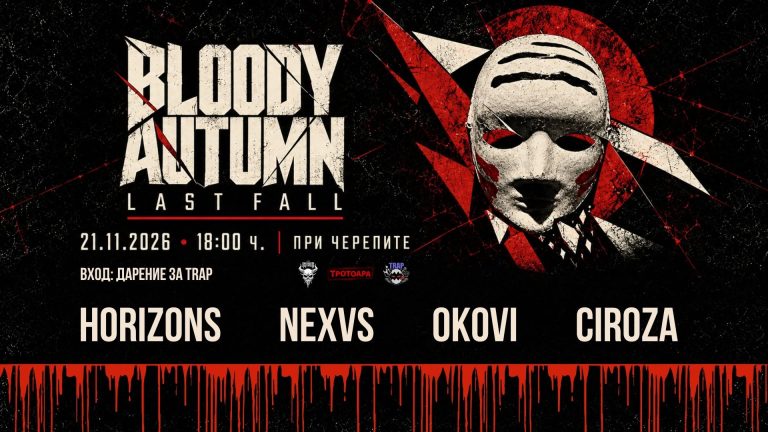
Four bands on making music and finding a stage
Ahead of Bloody Autumn: Last Fall on 21 November, Okovi, Ciroza, Nexvs and Horizons talk to Lia about rehearsal rooms,…


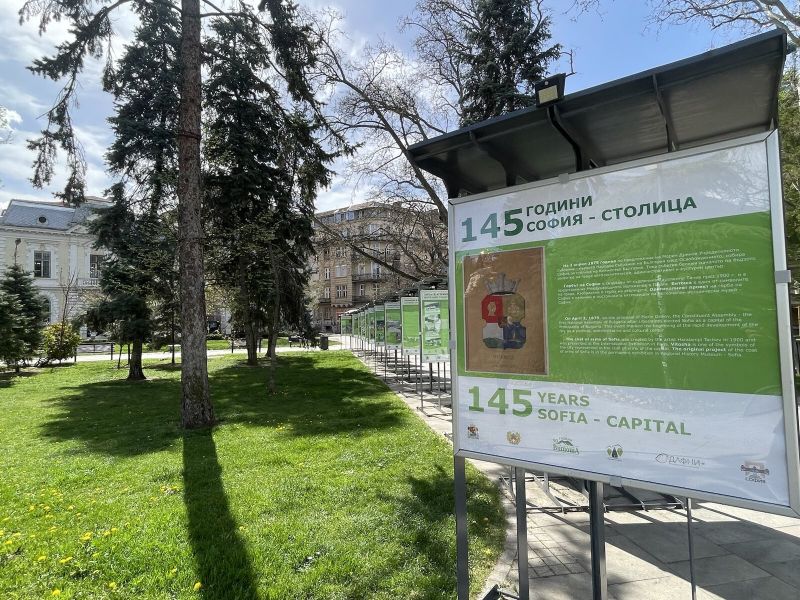
Today, Sofia celebrates 145 years as Bulgaria’s capital.
On 3 April 1879 (22 March under the old calendar), the Constituent Assembly in Veliko Tarnovo, a former Bulgarian capital, chose Sofia as the capital of the Principality of Bulgaria. The proposal came from Professor Marin Drinov, a historian, scholar and statesman.
Figures for 1878 put Sofia’s population at 11,694 and its area at 2.84 square kilometres. The city had two schools, seven churches, ten inns, 120 shops, 62 taverns, 19 bakeries and 3,306 houses.
Sofia Municipality has put together a varied programme of events to mark the anniversary.
From 1 to 14 April, the open-air gallery in the park outside the National Palace of Culture (near Cabana Cinema) is showing illustrations from the book “My Sofia and Other Folks”, published by Tochitza with support from Sofia’s Culture Programme. Its author and illustrator, Vyara Boyadjieva, sees Sofia as a collection of stories: the stories of the people she meets along the way. These colourful characters all around us give the city its vitality, its stories and its charm. “My Sofia and Other Folks” is an affectionate look at the people who make Sofia what it is.
An exhibition opens at Crystal Garden at 11:30 on 3 April, celebrating a symbol of Sofia that also features on its coat of arms: Mount Vitosha. Until 16 April, visitors to the open-air gallery can see archival photographs, maps and documents about the first steps towards designating Vitosha as a protected area, what that meant for private land and properties, how rules on construction changed, and other details of how the mountain has been managed and protected. The exhibition traces the building of mountain huts and other infrastructure. Its second part explores Vitosha’s biodiversity, from its rich plant life to the elusive animals that can be spotted close to the city and even within it. It also presents museums and paths where people can learn, play sports and spend time together in nature close to the capital. The exhibition is jointly organised with the Sofia Regional History Museum and the Vitosha Nature Park Directorate.
The Sofia Wind Orchestra will give a concert in Crystal Garden at noon.
On 3 April, residents and visitors can enjoy free admission to Sofia City Art Gallery and its branches, the Dechko Uzunov Museum Gallery and the Vaska Emanuilova Gallery. The Sofia Regional History Museum will also offer free entry to the permanent collection and temporary exhibitions at 1 Banski Square, the archaeological remains beneath Knyaginya Maria Luiza Boulevard at the Ancient Serdica Complex, the archaeological level beneath Saint Sophia Basilica and the Triangular Tower of Serdica.
On 3 April, seventeen Sofia Metro stations will ring with music played by young Sofia musicians.
Students of the Prof. Pancho Vladigerov National Academy of Music and ensembles from Trotoara 2020 Community Centre will play from 17:30 to 18:30 at Serdika, Vasil Levski, Sofia University, National Palace of Culture, G. M. Dimitrov, Zapaden Park, Sofia Airport, Teatralna, Vitosha, Business Park, Krasno Selo, Vardar, Central Railway Station, European Union and Patriarch Evtimiy stations. The Sofia Jazz Ensemble of the Nadezhda Municipal Cultural Institute will perform at Han Kubrat station. The event is being held in partnership with MUSICAUTOR.
On 3 April, a three-day film festival entitled “Sofia’s Culture Programme Presents…” opens at Vlaykova Cinema. It features documentaries funded by Sofia Municipality and the film strand of Sofia’s Culture Programme. Viewers will be able to meet some of the filmmakers. Screenings continue on 6 and 7 April.
The programme opens at 20:00 on 3 April with “The Houses Speak” (50 minutes), directed by Vladimir Lyutskanov, written by Antoaneta Bachurova and filmed by Kiril Prodanov.
“The Houses Speak” is the biography of a city told to the people who live there today. It reminds us that each of us is responsible for the quality of the life we share. The series blends art and documentary to explore Sofia’s architectural masterpieces and the lives buried under layers of history. Through images and stories it recalls the vision of figures in post-Liberation Bulgaria who shaped the human character of a modern city that soon became part of a shared European project.
Screenings on 6 April begin at 16:00 with “I Am Denis” (25 minutes), written and directed by Orlin Milchev, with cinematography by Filip Tarpov. This debut documentary explores closeness and friendship against the backdrop of the war in Ukraine and the refugee crisis. Denis Ivashchenko is an 18-year-old Bessarabian Bulgarian who fled the war in Ukraine. He arrived in Sofia alone in June 2022 and looked for work through Facebook groups and websites. One of his posts drew a reply from Aleks Georgiev, the owner of a warehouse with a team of 30. Having grown up on the outskirts of the city, Aleks knows hardship. He sees potential in Denis, and something of himself. He follows his instinct and gives him a job.
Kamen Vodenicharov created and produced “105 Minutes Sofia”, written by Tanya Dimova, directed by Dimitar Landzhev and filmed by Petar Dimov. The project brings Sofia to life through a mix of animation, documentary and fiction. The screening starts at 16:30 and runs for 96 minutes.
At 18:30, “In the Name of God Rugby” traces the sport’s journey from the wider world to Bulgaria, from the unwelcome arrival of this “capitalist game” through achievements erased from the record, its quiet spread and signs of a revival in the twenty-first century. Combining archive recordings, footage from the pitch and accounts from players from 1956 to the present, it looks beyond sport to show what life was like in Bulgaria across the decades of the twentieth century, with and without rugby. Contributors include historians Veselin Metodiev and Dimitar Stoyanovich and musicians Orlin Pavlov, Vladimir Ampov (Grafa), and Blagovest and Svetoslav Argirov. Written and directed by Vasil Varbanov, with cinematography by Krum Rodriguez and Orlin Ruevski.
Part two of “The Houses Speak” screens at 16:00 on 7 April. At 17:00, “Sofia and K-pop” explores one of the city’s many faces: its community of Korean pop music fans. Near the Central Department Store (TsUM) and the National Palace of Culture, and in the Sofia University underpass, they rehearse and express their love of dance and music. For them, Sofia offers new opportunities and endless space for self-expression. The videos they make are shaped by the places they practise and live as much as by the music itself. The film follows them from choosing a dance to performing it. Written and directed by Mario Georgiev, with cinematography by Boyan Karamfilov.
At 18:30, “The Sound of Sofia” explores how street music reveals the capital’s cultural diversity. It introduces the musicians who perform on its streets, some of whom have become city fixtures. Alongside Bulgarian performers, the film meets international street musicians who have become part of Sofia’s cultural life.
Directed by Nikolay Mutafchiev, the film features a special appearance by Stoyan Royanov (Ya-Ya).
On 6 and 7 April, Sofia Municipality and historicalroutes.bg will run guided history talks entitled “Behind the Façades of 1 Parizh Street and 33 Moskovska Street”. The municipality will open its central buildings so that visitors can enjoy the architecture of industrialist Kiro Stefanov’s home at 1 Parizh Street and see the old Royal Palace Intendance, now City Hall at 33 Moskovska Street. Five talks will run each day, lasting around 45 minutes apiece.
The guide is Zdravko Petrov of historicalroutes.bg, an urban planner and author of “Historical Routes: Sofia”. He will describe what Sofia looked like after the Liberation, the income and spending in the city’s first budget, and why Konstantin Jireček called it “the Bulgarian Venice”. With two of Sofia’s most remarkable buildings as a backdrop, visitors will hear how people set about building a European capital, transforming Sofia in under three decades. Winding lanes and blind alleys gave way to wide, straight streets with lighting and electric trams.
The building at 33 Moskovska Street will also display Haralampi Tachev’s original design for Sofia’s coat of arms.
Sofia City Library, one of the city’s oldest municipal cultural institutions, will mark the 145th anniversary of Sofia’s designation as capital with a series of events.
A photographic and documentary exhibition, “The Mayors of Sofia”
The exhibition presents the mayors of Sofia from the founding of the City Council to the present, highlighting milestones and achievements from their time in office. Rare books and collections of documents from the library’s holdings shed light on how successive administrations improved the city and turned it into a modern European metropolis. Visitors can see biographies of mayors including Dimitar Petkov, General Vladimir Vazov and engineer Ivan Ivanov, along with valuable original editions on landmark buildings, monuments and institutions and the stories behind them. Rare volumes on display include “A Brief Historical Survey of Sofia Municipality” (1932), by Aleksandar Tatsov, head of the municipality’s administrative department. Also featured are “Our Capital, Its Improvement and Beautification” (1907), by Asen Kermekchiev, and “Old Sofia” (1941), by engineer Radoslav Mihaylov, a former deputy mayor under Ivan Ivanov. Other exhibits include “Aleksandrovska Hospital” and commemorative books from Sofia’s First Boys’ High School and First Girls’ High School, both published in 1904.
“My Sofia” round table, 4 April at 14:00, Sofia Gallery
The discussion brings together for the first time prominent authors of books that introduce general readers to the capital’s history and development.
Panellists include Professor Kiril Topalov and Professor Toni Nikolov, both winners of the Sofia City Library Annual Award for the most interesting book about Sofia, along with Petar Velichkov, PhD, Aleksandar Gerov, PhD, Mariana Ekimova-Melnishka, Pavlina Delcheva-Vezhinova, Magdalena Gigova, Georgi-Momchil Popov and Zdravko Petrov. Viktor Topalov will moderate. An accompanying exhibition will feature the participants’ own books about Sofia.
The round table will present all of Sofia City Library’s publications about the capital, including its series on the city’s recent past: “My Sofia”, “Greater Sofia” and “Beautiful Sofia”, available digitally on the library’s website. The library will also introduce its newest title, “Curious Sofia”.
The event will also see the founding of the first informal club for writers, researchers and journalists who write about Sofia. The club’s activities aim to draw readers to the unique literary heritage held in the library’s collections and to the digital platforms the library has developed. It is being set up with Sofia City Library’s support. Members will take part in library initiatives that introduce young people and school pupils to Sofia’s rich cultural heritage.
A guided tour through the collections of Sofia City Library’s “Notable Bulgarians” literary museum will explore “Sofia in the Work of Simeon Radev, Dr Konstantin Stoilov and Kiril Hristov” (3 April, starting at 14:00).
Source OFFNews · OFFNews
This post is also available in: Bulgarian
Ahead of Bloody Autumn: Last Fall on 21 November, Okovi, Ciroza, Nexvs and Horizons talk to Lia about rehearsal rooms,…
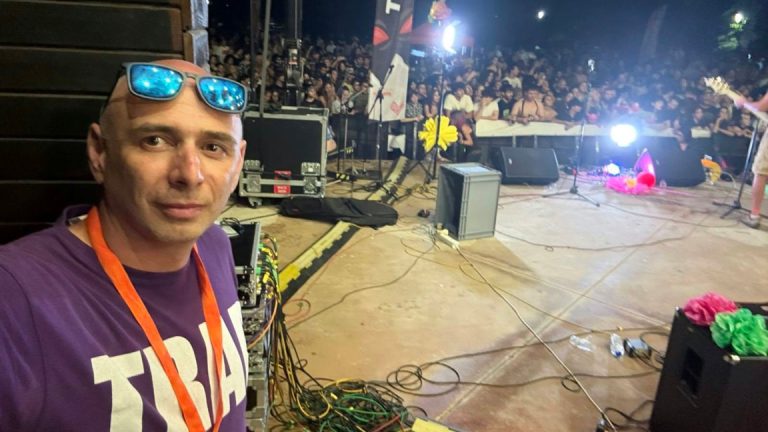
Speaking to Ivaylo Stefanov on “Alarma”, Deyan Yankov describes the cultural life of the Trotoara 2020 Community Center, from…
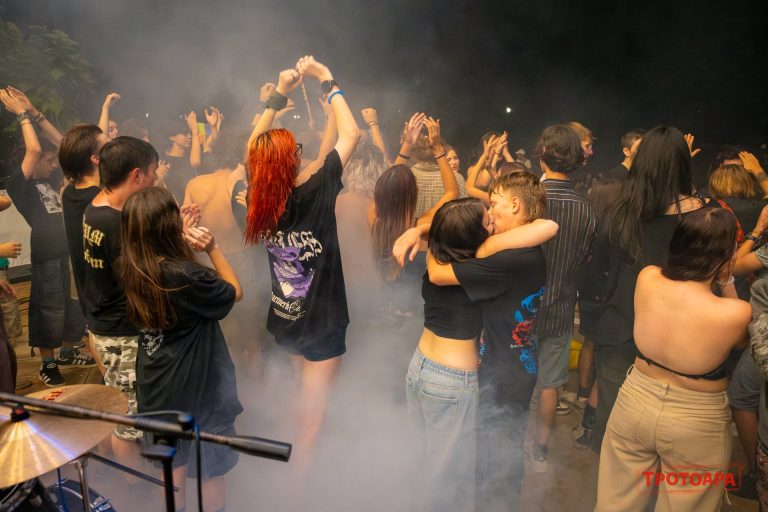
TRAP Fest is a free festival and a stage for young bands who deserve the best possible conditions to play…
