


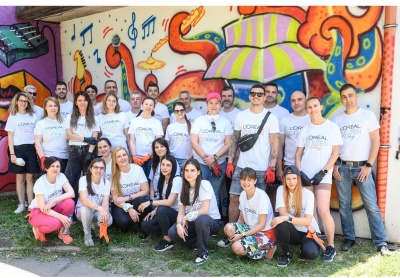
Young people in Sofia can now develop their talents in new spaces at Trotoara 2020 Community Centre
Employees of L’Oréal Bulgaria helped renovate and equip a youth centre for school pupils, university students and young people from…


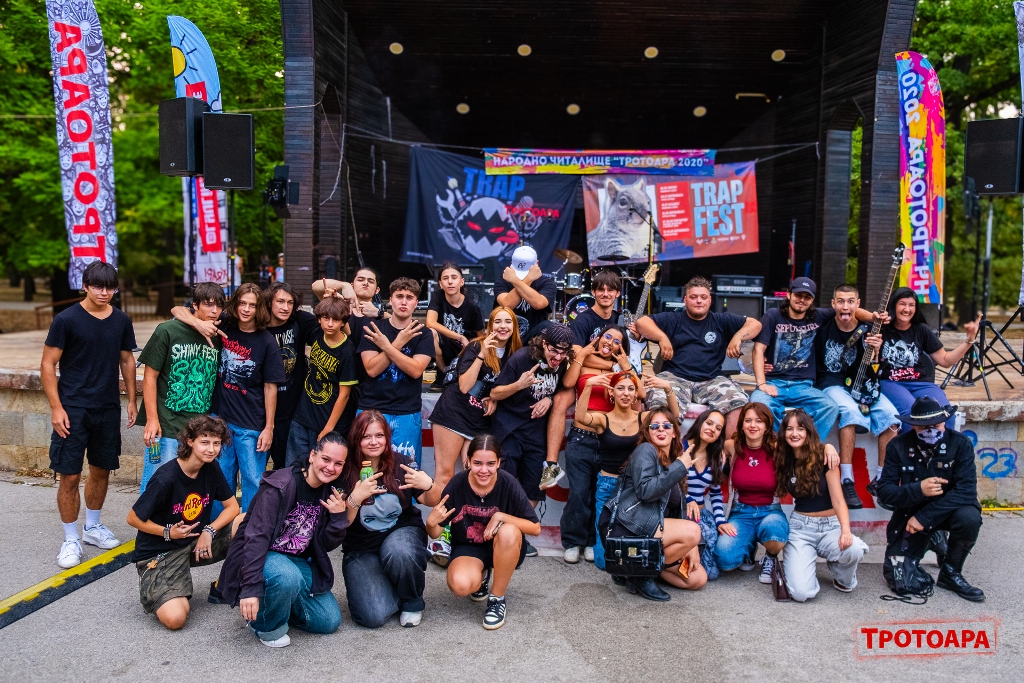
In Sofia, a community centre shows what making culture together can look like today: a stage, a microphone, a guitar, a camera, volunteers and a community that speaks for itself without waiting to be invited.
Some of Bulgaria’s community cultural centres, known as chitalishta, preserve old songs, customs and the stories families pass down. Others show that keeping memory alive takes more than looking back. It also takes the courage to make something now.
Trotoara 2020 Community Centre in Sofia is one such place. It bears little resemblance to the familiar image of a chitalishte with a library, a stage and a rehearsal room. Trotoara is an urban space, full of young people, noise and life. Culture here takes the form of concerts, festivals, workshops, training, internships, volunteering and conversations about subjects that rarely make it onto official stages.
One sentence in their account says almost everything. At the heart of their work is the idea of the chitalishte as “a living environment, a place where young people take part and create things themselves”.
That is what the story of Trotoara 2020 turns on. Young people here do much more than come to a show, watch it and go home. They dream things up, organise events, carry equipment, set up the stage, film, run the sound, get the word out, play, sing, host, make mistakes, learn and try again.
And that is how a community centre becomes much more than a cultural institution. It becomes a place to grow up.
TRAP Fest – when an idea takes the stage
Trotoara 2020 is best known for its longstanding connection with TRAP Fest, a series of music events and festivals that gives young artists and their communities a stage.
It began on a small scale, as a chance for young musicians to play in front of an audience. Over time, people began to gather around it. Friendships formed, teams came together, volunteers turned up and new ideas emerged. Gradually, TRAP Fest and its regional editions became a familiar part of youth culture in Sofia.
But the concert is only part of what matters.
What matters most is what happens before and after it. Rehearsals. Conversations. Stepping onto a stage for the first time. The nerves before a show. Getting the equipment ready. The moment a young person realises that their idea can become sound, lights, an audience and something everyone experiences together.
As the people at the centre put it, young people see the whole process through, “from the idea to making it happen”. This goes beyond putting on a cultural programme. It is learning by doing.
In that sense TRAP Fest is much more than a festival. It is a new form of the homegrown arts that chitalishta have long nurtured.
One of the most striking lines in the centre’s response puts it this way: “Culture is something you make, not something you consume.”
That sentence could be a manifesto. Behind it is a whole philosophy that rejects passivity, waiting around and the idea that somebody else should find ways to “engage” young people. At Trotoara 2020 young people shape their own surroundings.
Dusting off the word “chitalishte”
The word “chitalishte” often carries the weight of history. Sometimes, unfairly, people associate it only with the past, folk ensembles and holiday programmes: something familiar, yet somehow far removed from a young person’s everyday life.
Trotoara 2020 offers another reading.
Here, a community centre can be a stage.
It can be a club.
It can be a school without desks.
It can be a place for volunteers.
It can be a space where people talk about mental health, too.
It can be a digital community.
It can be a young person’s first real chance to make something of their own.
The centre runs concerts, festivals, creative workshops, training courses and internships, and works with schools, universities and other institutions. Behind those words are real people: school pupils, university students, young artists and volunteers. They do much more than attend events. They help make them happen.
That is what makes this example matter. It broadens our sense of what a chitalishte can be. The tradition is a living thing, able to change with the times and the needs of the people it serves.
When culture moves beyond the city centre
One of Trotoara 2020’s major initiatives is TRAP Fest Regionals, which takes the festival out of the city centre and into the neighbourhoods where young people are.
This matters because culture often clusters in a few familiar places: downtown, in major venues, on the “right” stages. Young people live everywhere. Out in the neighbourhoods. Between school and home, the bus stop, the park, the screen of a phone and their own search for a way forward.
TRAP Fest Regionals turns the usual arrangement around. It takes culture closer to young people instead of waiting for them to come to it.
There is music, and there are workshops, training sessions, volunteer jobs, conversations, encounters and work done together. Social networks, videos and digital channels have a place, too. They are the language young people use to talk to one another, show who they are and find their communities.
Making art together now extends well beyond rehearsing in a room. It also means making music, videos, campaigns, online content, events and friendships.
A place where you can be heard
Perhaps the most powerful change the people at Trotoara 2020 describe is that young people have started seeing the centre as “a place of their own where they can put their ideas into practice and be heard”.
That is a big deal.
One of the hardest things for a young person is finding somewhere that asks what they want to create instead of simply telling them what to do. Somewhere that treats mistakes as part of the process. Somewhere you can feel that you belong without anyone having to tell you so.
Trotoara 2020 does more than put on events. It builds confidence, gives people their first practical skills and makes room for friendships, projects, ideas and civic involvement.
So when people at the centre say young people are becoming “drivers of change”, it sounds like something already happening. You can see it in the rehearsal room, on stage, behind the camera, at the microphone and among the volunteers.
A new face for a longstanding cause
The story of Trotoara 2020 matters to the series “170 Years of Bulgaria’s Community Centres: The Living Memory of Bulgaria” because it shows that the idea behind the chitalishte has outlived the nineteenth century. It can be entirely contemporary: loud, urban, digital, youthful and experimental.
At its heart, the purpose remains the same:
In Garvan memory dances in the Brazaya folk ritual. In Sofia, at Trotoara 2020, it rings out through a microphone, a guitar, drums, a camera and the voices of young people.
This, too, is a chitalishte.
A workshop for the future, not a museum of the past.
Online resource: https://kinematograf.bg/there-is-nothing-to-go-wrong-film
Photos: Trotoara 2020 Community Centre
#CommunityCentreStories
Source NGO Portal
This post is also available in: Bulgarian
Employees of L’Oréal Bulgaria helped renovate and equip a youth centre for school pupils, university students and young people from…

Ahead of Bloody Autumn: Last Fall on 21 November, Okovi, Ciroza, Nexvs and Horizons talk to Lia about rehearsal rooms,…
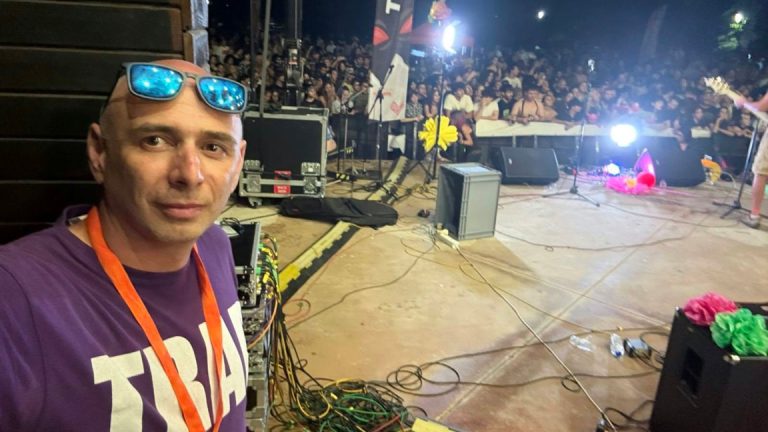
Speaking to Ivaylo Stefanov on “Alarma”, Deyan Yankov describes the cultural life of the Trotoara 2020 Community Center, from…
