

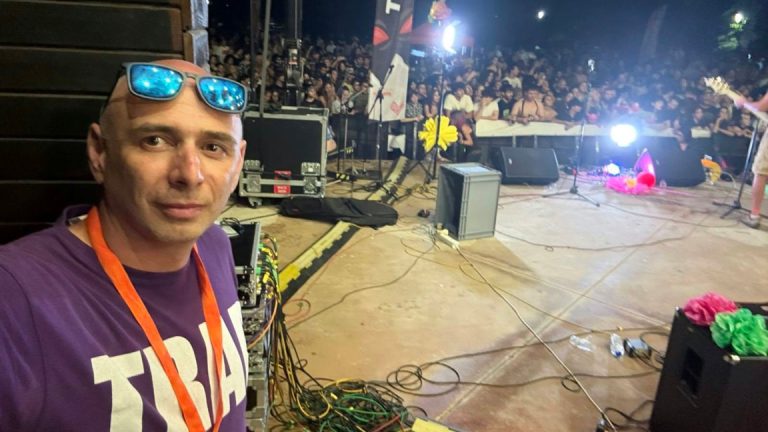
What challenges do Bulgaria’s community cultural centres face today?
Speaking to Ivaylo Stefanov on “Alarma”, Deyan Yankov describes the cultural life of the Trotoara 2020 Community Center, from…


“The question of truth is one we inherited, because so many things went unreformed after 1989. In Bulgaria, as under any totalitarian regime, cultural institutions were expected to serve a particular ideology. In the 1990s, that meant the old narrative needed to be challenged and re-examined, and in many places that never happened,” Dorovska said. She explained that a museum’s narrative goes beyond the work of a single curator. It needs a wider body of facts and interpretations to draw on, and that’s missing.
Deyan Yankov said he loves visiting museums when he travels abroad. He added,
“Personally, I’m not interested in the truth at all. What people see in museums affects them as individuals and as a society. It inspires them, motivates them and makes them want to do things. Whether it’s true or not doesn’t matter.” He gave the example of War and Peace, saying that it’s 70 per cent true and that this doesn’t stop it being the greatest book.
“In every country I’ve visited, museums play a very important part in public life and education. Education itself is part of how society develops. It shapes us all, young and old. When museum displays change, adults learn new things as well,” Yankov explained.

Dorovska gave the example of her own museum, the Museum of Humour and Satire in Gabrovo, where maintaining the delicate balance between permanent displays and temporary exhibitions takes both staff and money. She said there is a programme to bring school students and museums together, but she feels there is room for improvement.
“When the money goes to schools, and schools decide where and how to spend it, it’s quite difficult to get a dialogue going,” Dorovska said, adding that schools and museums need to be able to work together.
Yankov observed that we want young people to visit museums, yet we design them for adults. Dorovska added that one important consideration for children aged five to twelve is to get away from the usual classroom model. The real challenge, she said, comes with the next age group, teenagers, where there’s a need to develop the idea of a youth board.
“We want them to come and do things, rather than simply come and look,” she said.
“What Minister Atanasov and I have agreed on so far is a straightforward approach to management. There should be a basic set of requirements that all museums must meet. They receive public funding and serve a public need, so there has to be a minimum standard below which they cannot fall. At the same time, where people have the energy and the appetite to do more, they should have more room to develop,” said Dorovska.
Listen to the audio for the full conversation.
Source Do young people visit museums? – Bulgarian National Radio
This post is also available in: Bulgarian
Speaking to Ivaylo Stefanov on “Alarma”, Deyan Yankov describes the cultural life of the Trotoara 2020 Community Center, from…
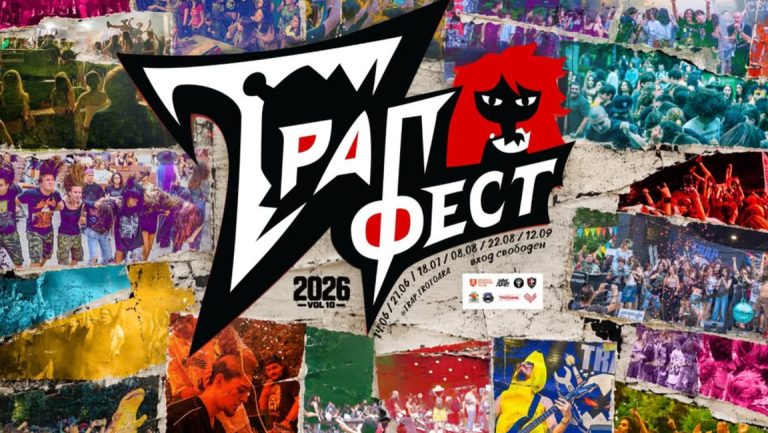
TRAP fest 2026 Vol. 10 continues, and this time the stage is moving to Mladost. The festival has always reached…
Trotoara 2020 is a community cultural centre in Sofia that goes beyond the familiar idea of a place that preserves…


