


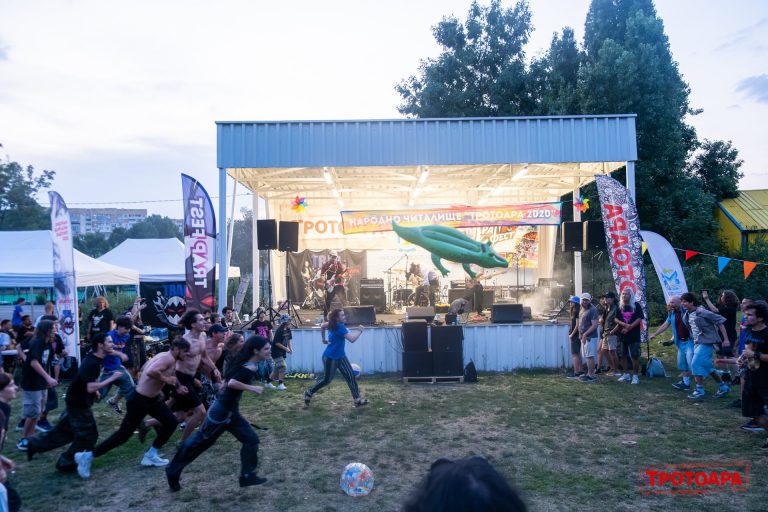
TRAP Fest 2026 – A summer with the people who made it happen
A closer look at the tenth edition A summer evening at TRAP Fest, 27 June 2026. On 14 June, setup…


I’ve heard some version of that for as long as I can remember. As a kid I got told no: no candyfloss, no Lego, no going out, no doing much of anything except reading and studying.
Then I became a teenager. No black clothes and army boots in summer, no coming home after eight, no guitar lessons.
Naturally, for every NO I did three other forbidden things. Who are you to tell me no? Have you lost your minds?
We all know how the NOs multiply when you grow up.
As you know, at Trotoara we’re building a youth centre and doing various other things. We want teenagers in Sofia to have a good place to go, somewhere to find a spark of inspiration and the space to see where it takes them.
I’ve lost count of the times people have told me: that won’t work, ridiculous, no.
T.R.A.P. has monthly expenses. Every month we pay rent, pay bills, buy renovation materials and, once in a while, when we find ourselves rolling in tens of leva, little extras like food.
So we’ve decided, just like that, that if our project is to have a solid foundation, its money has to come from society. What we’re doing is for society, after all, so society ought to care and help. Logical. We decided society means people and businesses. Logical again. That’s where we decided to put our efforts.
Corporate sponsors and so-called social responsibility.
Over the past year we’ve written countless emails proposing sponsorships, meetings, presentations and conversations with key employees and managers. We organise events, get the word out about our projects, do marketing, make videos, create content and do whatever else might make us interesting, appealing and cool to these potential corporate donors.
Say someone earns 1,000 leva a month. Out of that thousand they give a whole ten leva to a cause, a street musician, the arts, whatever they choose. They just GIVE it to something they think is good. What do they get in return? The satisfaction of knowing they’ve helped someone. Those ten leva are 1% of their income. About 6, 7, 8% of their profit, if you deduct taxes and expenses.
Looking through the Commercial Register for potential sponsors and donors, we found a company declaring annual profits of 100,000 leva on revenue of a million. A small business by any standard. We figured that if this company, like our ordinary person, gave 1% of its profit (we wouldn’t dream of suggesting 1% of revenue) to charity or a good cause, that would be 1,000 leva a year. So we got in touch. Of course they turned us down flat: ‘Ridiculous. We don’t do that sort of thing.’
Naturally we didn’t give up. Next company: a call centre with 1,000-plus staff and a multi-storey building of its own. Declared profit of 2,100,000 leva in 2013, presumably considerably more by the time we called, since their workforce had tripled. Do the 1% calculation yourself. We emailed a proposal, suggested getting in touch, meeting up, the usual. Back came an ‘irresistible’ offer: ‘Yes, we’d love to help. We could sell your cards at our Christmas bazaar so our employees could buy them.’ A moment’s bewilderment on our end… Er, we don’t want to sell cards to your staff. We’re asking whether your COMPANY wants to show some CORPORATE social responsibility and make a DONATION to support the community, young people and the things we do with them. Their budget for the year was gone, they replied. They’d planted fifty trees somewhere. We could talk again next year. Mind you, if we wanted to organise a free team-building day where their employees could have fun volunteering for a good cause… Folks, hold it right there. We’re not a party venue! TRAP’s rent takes money! Don’t pass the buck to your employees and then pat yourselves on the back for being MAJOR DONORS. They already give their time to make you a profit. We don’t want to sell them our cards too!
We’d asked for 100 leva a month to pay the electricity bill. And no, they didn’t turn us down because they give it to another organisation. They just haven’t got it, you see!
And on it goes. We talk to managers, staff, owners, sales reps, HR people, cleaners, the office goldfish, sometimes even the building security guards (stern but fair). The answer is the same one we got as kids.
Are companies actually obliged to give some of their profits back to society? Of course not. Especially if they don’t care what happens in it. That’s what the state’s for, right? Funny how we talk endlessly about the state doing nothing. We know it, we recognise it and then, knowing perfectly well, we use it as an excuse to wash our hands of things.
What’s our responsibility then? To pay taxes? How many of you have run your own business? How many have had this conversation with your accountant: ‘Let’s see how we can bring down last year’s profit tax.’ Just thinking back to our rummage through the Commercial Register, that’s all.
And if we’re forever talking about how the state does nothing, why do we do nothing either? Yes, it’s the state’s job! It really is! But when it does nothing, perhaps we needn’t be knocked sideways. It’s not as though we pay it all that much in tax anyway. Society is us. It isn’t some minister with a collection of flats, or another fellow living the good life who has nothing to say to us. Let them get on with it. Why fuss over them? They aren’t society. We are. If we want a nicer home, how about we paint that kitchen? Our little friend on the take has painted one already. He won’t be doing ours. We’d be mad to wait for the likes of him to do something for society.
I won’t even start on giving, volunteering and corporate social responsibility in other countries. Or why those countries are so developed. Could it have something to do with people who have money looking after their communities? Actually, going on about other countries is pretty daft. Our kitchen’s a mess because we haven’t got round to painting it. That’s it.
I won’t bring up Sofia University and the brothers Hristo and Evlogi Georgiev either, or the hundreds of Bulgarians like them in the National Revival. That was another age, wasn’t it? We don’t live in that world any more? Must have been nice back then. That’s what people say lately, anyway.
Maybe young people don’t matter to us? Children with special needs, older people, the unemployed, people with nothing to eat, stray animals, nature, the people begging on the street? Education, healthcare, happiness? Thousands of other causes plainly lacking the state support they need, whether because the state can’t, won’t, or because weather presenter Emo Cholakov isn’t on bTV?
Apparently they don’t matter enough to share 1% of our declared company profits. Not even enough to open an email, one of the ten thousand pleas for help every organisation sends while trying to do something about these problems, to help the society around it. A society that, strangely, takes no interest in the fact that someone wants to help and do some good?
Are those of us saddled with the shameful name ‘association’ or ‘foundation’ doing something wrong? Giving our time, emotions, labour, skills and knowledge?
Some people do help. There aren’t many, but they exist. Let’s work together so there are more and more of them. Let’s take part, tell the stories, lend a hand, volunteer. Let’s be a society and move forward together.
Help us find those socially responsible companies that actually CARE about the community!
The Trotoara Foundation believes in the future, believes in young people and will fight to the end!
Thanks for listening!
Our partners (an incomplete list, but we keep updating it).
==================================
This post is also available in: Bulgarian
A closer look at the tenth edition A summer evening at TRAP Fest, 27 June 2026. On 14 June, setup…
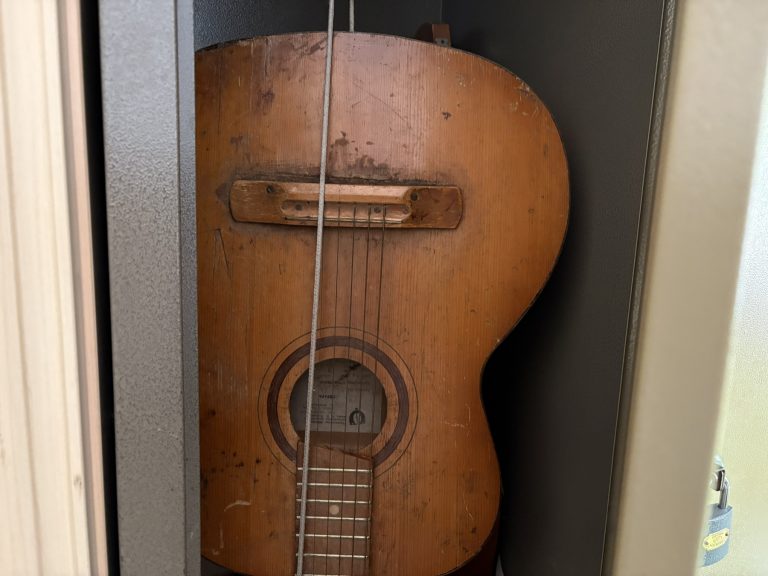
Deyan “Dido” Yankov on the tenth edition of TRAP Fest The guitar is still in the metal cabinet in my…
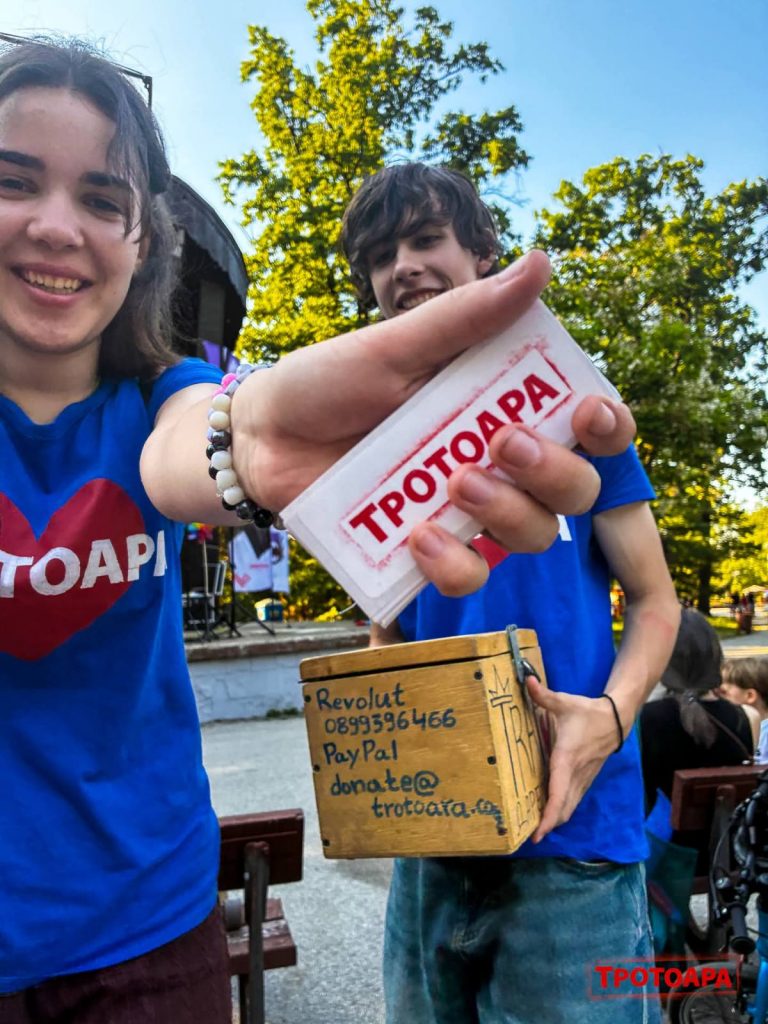
Magi | My summers of 2025 and 2026 The people of TRAP Fest, in front of the stage and behind…
