


Four bands on making music and finding a stage
Ahead of Bloody Autumn: Last Fall on 21 November, Okovi, Ciroza, Nexvs and Horizons talk to Lia about rehearsal rooms,…


Sofia’s Trotoara 2020 community centre is putting on TRAP Fest Summer 2021 at the Summer Stage in Borisova Gradina. On seven dates over the summer, young musicians and dancers working in all kinds of styles will take the stage.
Being a teenager isn’t easy. Your head’s a mess, your parents don’t understand you. You’re trying to find yourself and fighting with yourself at the same time. But that rebellious teenage spirit can make wonderful things happen.
Mark Levchev and Eva Nikolova of the Trotoara Foundation and Sofia’s Trotoara 2020 community centre (see below) told me how they encourage young people to express themselves, create and grow as individuals.
For young people
Deyan Yankov founded the Trotoara Foundation in 2014. His inspiration was the Rock Academy initiative, which uses music to include children labelled ‘difficult’ and encourage them to grow.
Trotoara’s mission is to bring volunteers, local people, businesses and organisations together to help young people become full members of their community. Eva, Mark and Deyan lead the foundation. They work with many volunteers, thirty of them long-term. Other organisations and mentors regularly join Trotoara’s initiatives, volunteering their time to help it grow.

The pavement is a place for everyone
Why Trotoara, ‘the pavement’? Because everyone meets on the street. “We’re street artists, more or less, and the pavement connects everyone. Anything can happen on the pavement. You can meet absolutely anyone there. The pavement is the place!” Mark tells me.
Trotoara gives young people room to explore music, dance, art, gaming and more. But the community that forms around it is even more valuable. At Trotoara you can be heard, get support and offer it yourself.
“You don’t have to have a talent to come here and do something. Basically, you just have to leave the house and turn up. You might find people who share your interests, someone to talk to or a chance to do whatever you’ve discovered for yourself. The main thing is that a community forms here: teenage students, older people, volunteers, our partners and people from outside whom we tell about it, like you. We give people opportunities, build a community and try to listen to teenagers. We help them achieve what they want instead of telling them to drop it because it’s silly. We show them how to make it happen and that we want to hear and support them,” says Eva.

Finding inspiration
Eva and Mark started out coming to foundation events. The idea soon won them over and they became part of it.
Mark says, “It inspired me because I’d never come across anything like it. I’ve been making music since 2015, even though people often told me at first that I was no good. So I decided to help someone struggling with confidence, the way I used to, and share my experience with young artists and performers.” Eva first encountered Trotoara’s ideas three years ago when Deyan came to her school to talk about TRAP Fest 2018. “The first thing I noticed was that you don’t have to meet any conditions to be here. It doesn’t depend on your finances, social status, sexual orientation or anything like that.”
Teen spirit is in the air
Often the events are entirely the students’ idea and it’s the students who make them happen. They have an idea and the desire, but they’re unsure of themselves or don’t know where to begin. “We help them, put them in touch with people. The main thing is to create a place where the kids don’t feel stifled or held back,” Eva explains.

TRAP – a space made by creators for creators
The foundation built TRAP with hard work, determination and help from volunteers, to give ideas and creativity a home. Its first room opened in 2017, complete with a skate ramp that still catches people’s eyes.

A few years later came studios and a computer room. Mark remembers the excitement of building them, mostly with young people and school students. “Twenty teenagers built the studio. We came every day, hammering nails, driving screws, laying cables. We didn’t know how to do electrical work, but a friend came and showed us. Seeing something you’ve made is hugely satisfying. The work we’d done inspired us,” Mark says.

Where there’s a will, there really is a way. “This whole place was built with volunteers’ hard work and donations. Some of the people who rehearse in the studio now once said to themselves, ‘I want this to exist, so I’m going to turn up and knock walls and bricks down, put up plasterboard, fit seals and so on,’” Eva says. “All this is paid for by corporate and private donations. We don’t apply to European programmes.”

Changing lives together
Mark and Eva say the teenagers who come to TRAP often change their lives for the better. Whether they’re a little different from the crowd or have taken a wrong turning, they find friendship and support. “I saw one teenager turn his life around. He’d lost his way, didn’t want to do anything and was into drugs. He kept coming to us and over time he stopped messing around, took up sport and now leads a much fuller, more meaningful life,” Mark says.
“It’s a place where teenagers feel safe and can talk about their problems. No one’s going to judge them or put them down. Quite the opposite: we’ll try to help however we can,” Eva adds.


They say young people have ideas in abundance, but often nobody pays attention. They need someone to say, yes, you can do this. That brings satisfaction, builds confidence and helps them improve their lives. TRAP also encourages kids to put effort into school. To compete in a gaming tournament, for example, they have to keep their grades up.
TRAP Fest
The festival started in 2017 with an idea: an event specifically for teenagers, about the things they care about. Several Sofia high schools got together and everyone said what they wanted to see. The result was a big festival with something for everyone. Music, dance workshops, gaming, graffiti, talks on all kinds of subjects, cinema, stand-up comedy and more. “Whatever anyone suggested, we tried to cover it. And we haven’t stopped since.”

Despite the events of summer 2020, the festival went ahead in a slightly different form: outdoor concerts on the Summer Stage in Borisova Gradina. Everyone is welcome.
You name the style: metal, pop, rock, art rock, punk, folk. The programme has something for everyone!

The festival opened on 17 July with Music Is Love, featuring Vyara Ivanova, Denis Vatov and others.
On 1 August Deception present their new album.
14 August is art rock day, when young bands including Endear, Cool Den and The Lefties take over the stage.
15 August brings Back Through the Centuries, with folk music, folk dance lessons and a fire show.
Next up is 28 August, a punk concert in memory of Mima, a dear friend of the foundation.
4 September brings Bloody Summer, a day of metal featuring newcomers and more experienced bands.
The festival closes on 5 September with a Latin carnival. Expect circus, Latin dancing and plenty of carnival costumes.
Making the impossible possible
To the Trotoara team, nothing is impossible. TRAP itself is their favourite example. There was a time it looked difficult, even impossible. Now it’s here.
“When Deyan started building TRAP, his friends asked why he was wasting his time. They said it would never happen. Now they come here and can’t believe this place exists. We really do believe nothing is impossible,” Eva explains.

They’re looking at taking the idea to other Bulgarian cities. Shumen and Burgas are among the places under active discussion. “Slowly but surely, we’re working out how to make a place like this possible elsewhere in Bulgaria. It catches on. People get in touch with us themselves,” Eva says.
Founding a chitalishte online
In 2020, the children and young people who came to TRAP had the idea of founding the Trotoara 2020 community centre to carry on the work. Soon afterwards COVID-19 arrived and it looked impossible: at least 150 people had to attend a founding assembly and sign the charter.
“We decided we could hold the meeting online even though a lot of lawyers told us the Commercial Register would probably reject the paperwork. We got all 229 founders to set up electronic signatures and held the meeting on Zoom. Signing took twelve hours. We’d thought it wouldn’t take more than two!” Eva tells me, still excited.
They pulled it off. A different sort of community centre, designed to be run by young people. Why? Because a chitalishte belongs to its community. “If we do things for young people, young people should help organise them, contribute ideas and say what they think,” Eva explains.

Finding yourself in the chaos
They tell me the most valuable thing about TRAP is how everyone finds their own way. Someone can walk in confused, with no idea what they want to do, and there’ll always be something to try.
Every interest, every passion can find an outlet. If you like writing, try posts and event reports. Into gaming? Why not organise tournaments? You can suggest what you’d like to do and see it happen. Eva remembers a Japanese anime fan who, with their help, started a podcast to talk about his interests.
I ask whether it’s difficult leading so many young people. Eva admits it can get chaotic. She and Mark keep working on their organisational skills and learning new methods. But there’s something good and organic about the chaos, too, they say. Too much organisation can put people off.
What matters is that everyone joins in, feels heard and contributes something of themselves.
Source: www.ngobg.info
By Lina Chakarova, intern at the NGO Portal
This post is also available in: Bulgarian
Ahead of Bloody Autumn: Last Fall on 21 November, Okovi, Ciroza, Nexvs and Horizons talk to Lia about rehearsal rooms,…
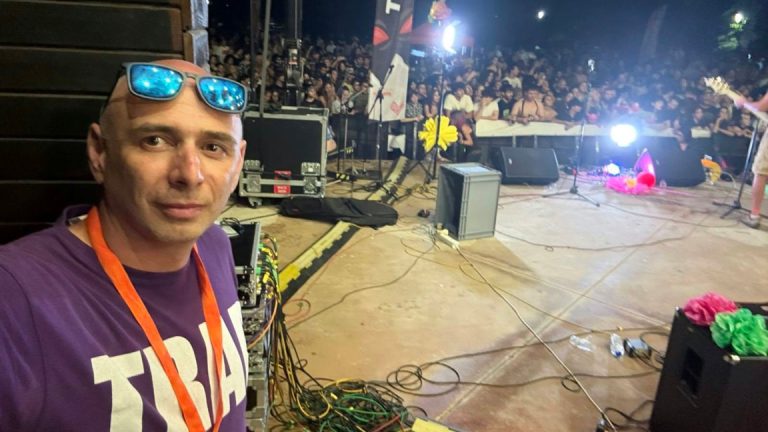
Speaking to Ivaylo Stefanov on “Alarma”, Deyan Yankov describes the cultural life of the Trotoara 2020 Community Center, from…
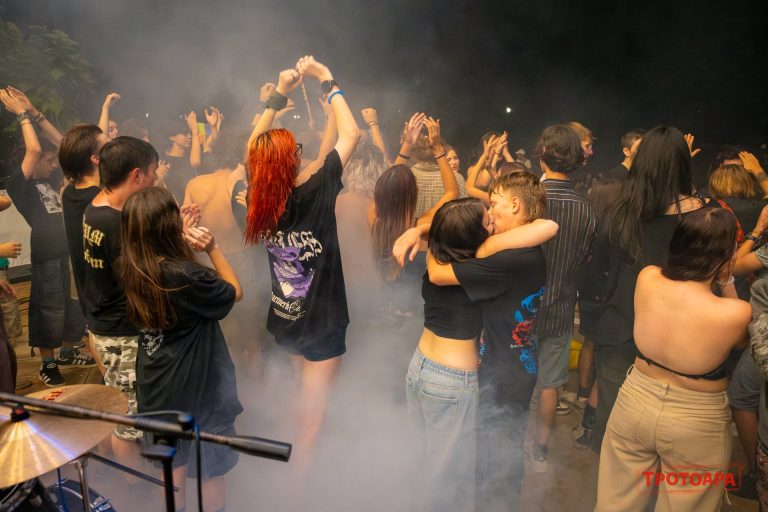
TRAP Fest is a free festival and a stage for young bands who deserve the best possible conditions to play…
