




Four bands on making music and finding a stage
Ahead of Bloody Autumn: Last Fall on 21 November, Okovi, Ciroza, Nexvs and Horizons talk to Lia about rehearsal rooms,…


Kalina Zdravkova and Boyan Vushkov from the Astea Solutions team tell us about themselves, the company and Trotoara, and answer plenty more questions along the way. Enjoy the read!
Thanks to the whole team at Astea Solutions for supporting us and believing in us!

What is Astea Solutions? What do you offer?
In short, Astea Solutions offers software solutions. Of every kind. The more challenging, the better: my colleagues and I like learning new things and never being bored. We’re even at a point now where we have the freedom to choose projects that let us work that way.
What’s your role at the company?
I’m a software analyst, the link between the client and the team, and sometimes between the actual human beings on the team, too. But that’s only part of what I do at Astea. Whatever our job title, we’re all free to get involved in initiatives that develop the company or the team, or anything else we feel like doing to make life a little easier for the people around us, or at least a little nicer.
Tell us a bit about yourself as a person.
Professional procrastinator. I’m always taking on one more thing so I’ve got a choice of things to switch to every five minutes. I never grumble, but I do my best to give other people less to grumble about. Overly rational. In a ‘crisis’ I don’t panic, I look at things calmly and clearly. I think in a way I’ve just described my job, too.
How did you end up at Astea Solutions, and what keeps you there?
I was halfway through my second year at Sofia University’s Faculty of Mathematics and Informatics. I wasn’t looking for work and had no experience, but one day I found myself interviewing for a software analyst job at a company I’d never heard of, Astea. Obviously it wasn’t quite so big or well known among students there then. And here I am ten years later! I’ve stayed because people are friendly at every level of management, you can do the things you like and pass on the ones you don’t. And, again, the variety.
What’s been the funniest moment at work? And the hardest?
I love how at lunchtime on Friday the office is quiet, everyone’s in meetings or talking to clients, and just a few hours (beers) later everyone’s singing Bohemian Rhapsody at the top of their lungs at another team event or Christmas party. Or non-Christmas party. Or a Friday evening that just happened to turn into a party.
There are plenty of examples of tough situations too. Our clients make sure of that. We’ve pieced together requirements for a new project from scribbles on a napkin and from an Excel workbook with 15 sheets. Working with a new client can be hard, but that’s part of what makes the job interesting. You learn to talk to all kinds of people. Some are used to formal corporate communication. Others are much more relaxed and we chat about where we went on Friday. Sometimes they’re both.
What difference does it make working with people of ‘different’ generations?
I wouldn’t say I work with people differently because of their age. We’ve had projects start with a few people who looked young and inexperienced to the client, but that scepticism evaporates pretty quickly.
Are there openings at your company for our young people?
We’re happy to make time for anyone who wants to talk and find out about the company and the people in it. More and more young people contact us about internships. We’ve worked with students at the Technological School of Electronic Systems for several years, and we’ve always had close ties with Sofia University’s Faculty of Mathematics and Informatics.
Why did you choose our cause, and do you support any others? Tell us about them.
We liked your cause because it was different. We usually support young people in education: our people mentor at hackathons, teach at the Technological School of Electronic Systems and the Faculty of Mathematics and Informatics, and run open days for school and university students. But what happens outside class matters just as much: social development, hobbies, useful skills. Or useless ones. No judgement. 🙂
What role does corporate social responsibility play? Should we support it?
Corporate social responsibility is at least as important as personal responsibility. When we as a company have the means, influence and audience to do something for someone else, especially children and young people, I think we should give it everything we’ve got.
What do young people need in order to grow?
With all the information around us, learning and developing are a choice. Most young people start on an equal footing and, if they want to, they can learn just about anything, even from YouTube videos (I still do it at 30). They need somewhere they can test themselves against others, share how cool the thing they’re learning is and how good they’re getting, and make other people want to try it. That’s something different from a parent’s or teacher’s ambitions.
Can people in their twenties run an institution with over 250 members?
When you’re doing something you like and you feel it matters to you and those 250 people, it makes no difference whether you’re 20, 30 or 50. When you know the end goal, the smaller, more immediate goals get easier and it all feels less scary. It also helps to have a whole team of people pitching in. Personally, I’m many times more motivated working in a team and I can’t imagine doing everything on my own.

What is Astea Solutions? What do you offer?
We help all kinds of people and businesses live happier, fuller lives with apps we develop from start to finish.
What’s your role at the company?
I go by senior writer of code and, as Kalina said, I juggle quite a few things on the side. The initiatives you can get involved in here mean a lot to me because they give me room to learn and grow in different directions. Also, variety is always great.
Tell us a bit about yourself as a person.
I like being useful. That probably sums me up best. I admire people who make things and people who aren’t afraid of change. ENFP-T, if that matters. I believe you should never underestimate a small gesture. If we all became even a little kinder, the grannies outside the block would stop gossiping about us and the world would have more knitted socks.
How did you end up at Astea Solutions, and what keeps you there?
I heard about Astea at a university event. About six months later a fellow student, Mitacheto, started an internship and kept telling us how good it was. A year later I was an intern too, along with three others from my course.
What’s been the funniest moment at work? And the hardest?
Team events definitely have the highest concentration of funny moments. Our internal project presentations can be pretty epic too. Once we tried recording a video instead of presenting live. The finished production was glorious. My muscles ached from laughing for days.
The hardest was probably the first client call where I played an active part. Stage fright is a terrible thing.
What difference does it make working with people of ‘different’ generations?
Here you only really notice different generations when talking to clients. The teams are very young and whatever age differences there are between colleagues, you don’t feel them.
Why did you choose our cause, and do you support any others? Tell us about them.
We support your cause because it builds a community where I, and I think plenty of my Astea colleagues, would feel at home. It lets people develop all sorts of skills and, frankly, it looks cool!
What role does corporate social responsibility play? Should we support it?
Astea is a company where personal social responsibility can easily become corporate responsibility. Our shared outlook and values help us get involved and stay active on all sorts of issues.
What do young people need in order to grow?
First of all, I’d say a place to experiment and improvise. Somewhere you can try new things without feeling under pressure. Somewhere you’ll find people who see the world as you do, and others who see it differently enough to challenge some of your beliefs. A community that likes to experiment and explore.
Can people in their twenties run an institution with over 250 members?
If they believe in what they’re doing, of course! Motivation and vision have nothing to do with age. We just have to put them into something we genuinely care about.
This post is also available in: Bulgarian
Ahead of Bloody Autumn: Last Fall on 21 November, Okovi, Ciroza, Nexvs and Horizons talk to Lia about rehearsal rooms,…
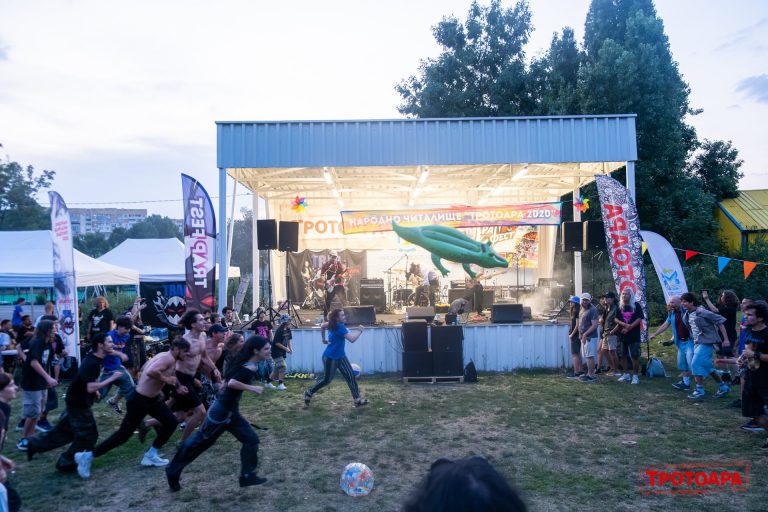
A closer look at the tenth edition A summer evening at TRAP Fest, 27 June 2026. On 14 June, setup…
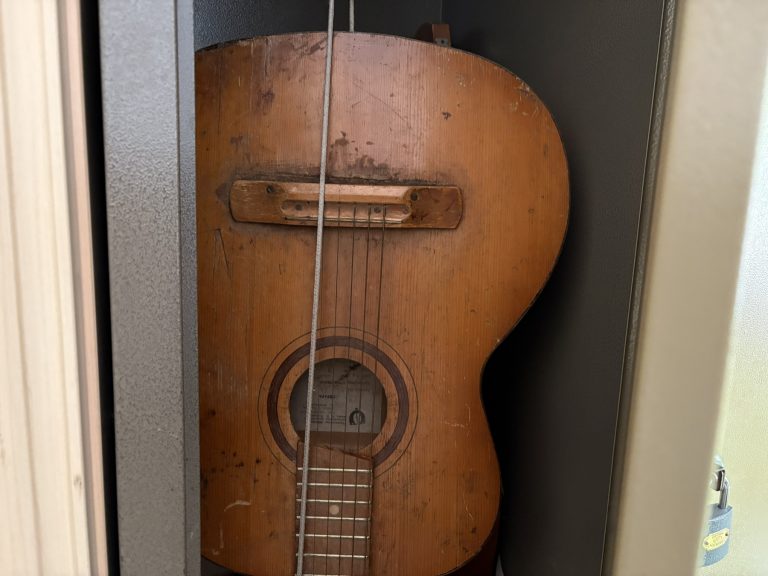
Deyan “Dido” Yankov on the tenth edition of TRAP Fest The guitar is still in the metal cabinet in my…
